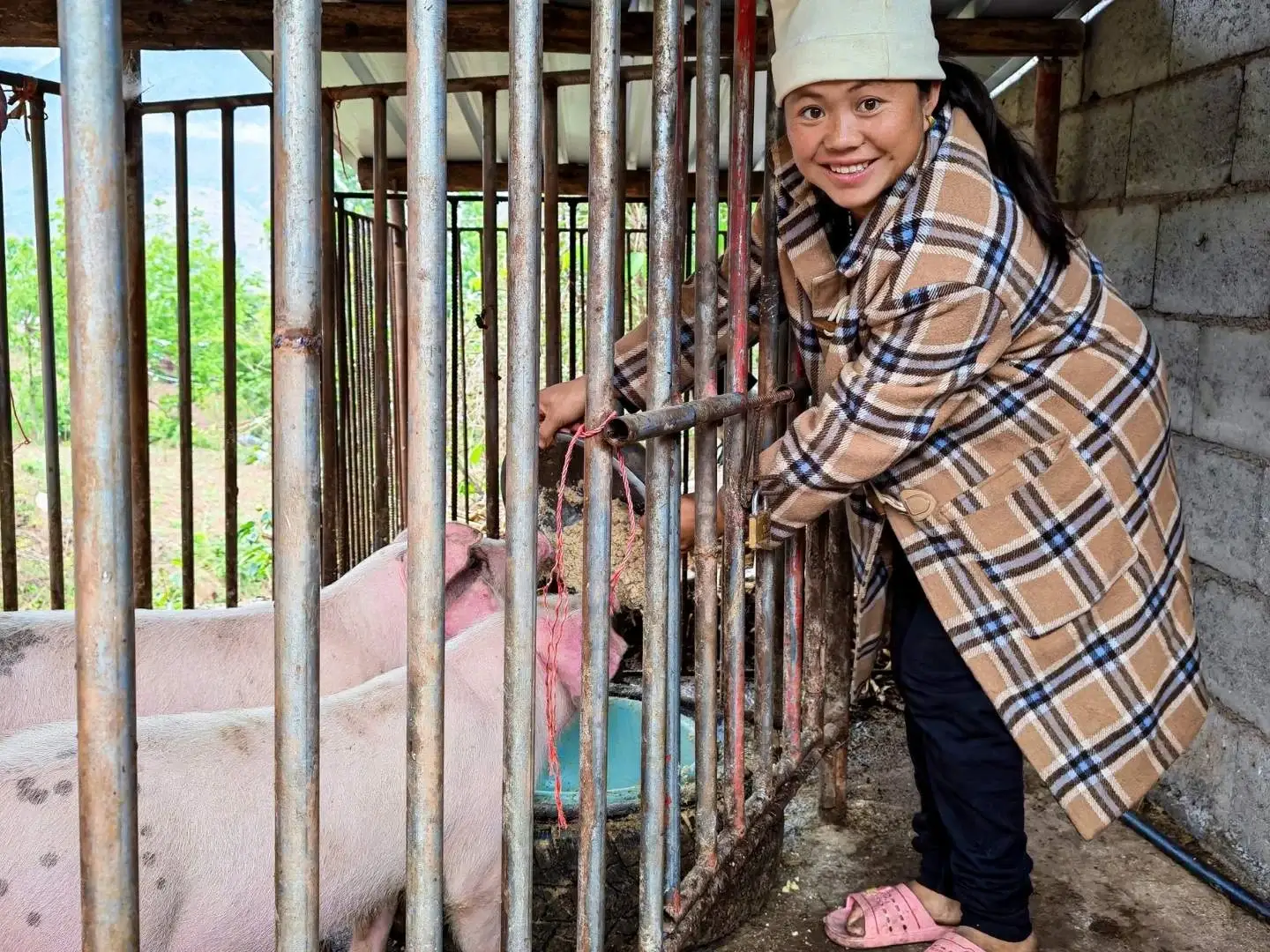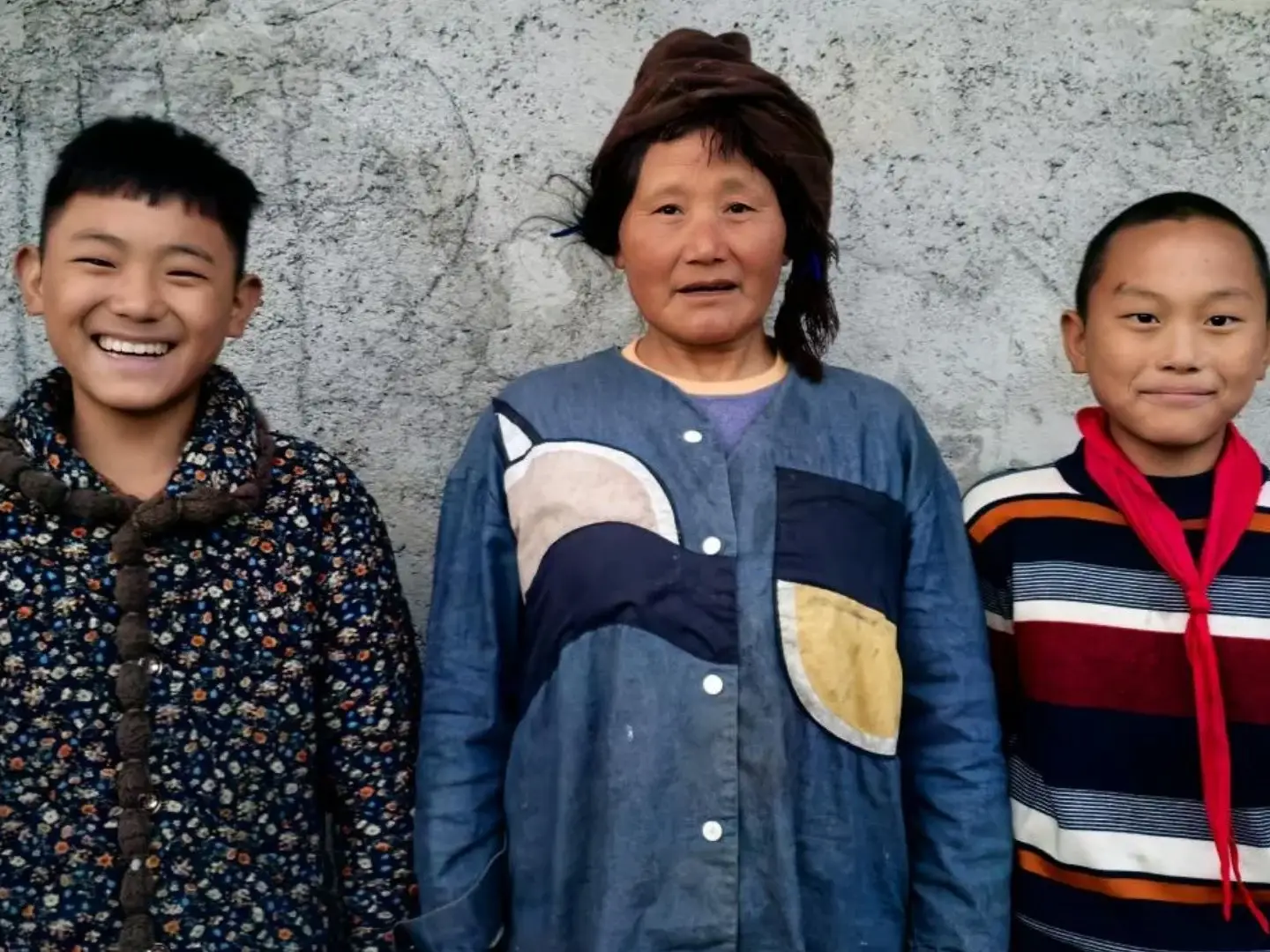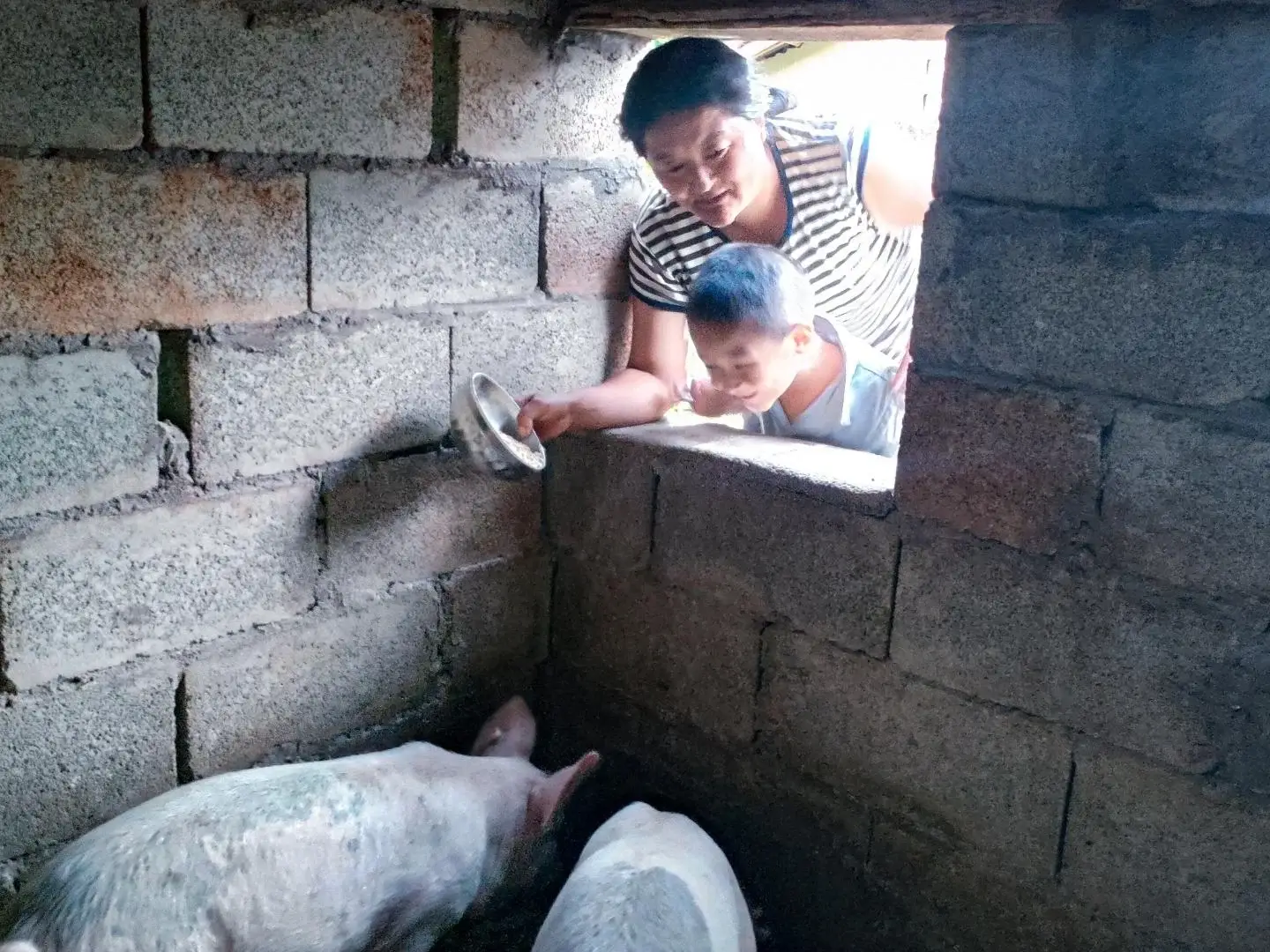
Our Chicken Farming Program aims to help families increase their financial income, enabling them to better support their children’s education and overall well-being. We hope the families can earn a profit of CNY 3,000 to 6,000 [USD 424 to 848] annually.
When we arrived at Yire Village, a drizzle was falling. We followed the village group leader towards the home of our beneficiary, Jiduo Zuoli (36). Her home is located a kilometer uphill, which is pretty common for homes in Rural China. Unlike urbanized cities, homes here are placed differently. Some are in the mountains, while others are in the forests.
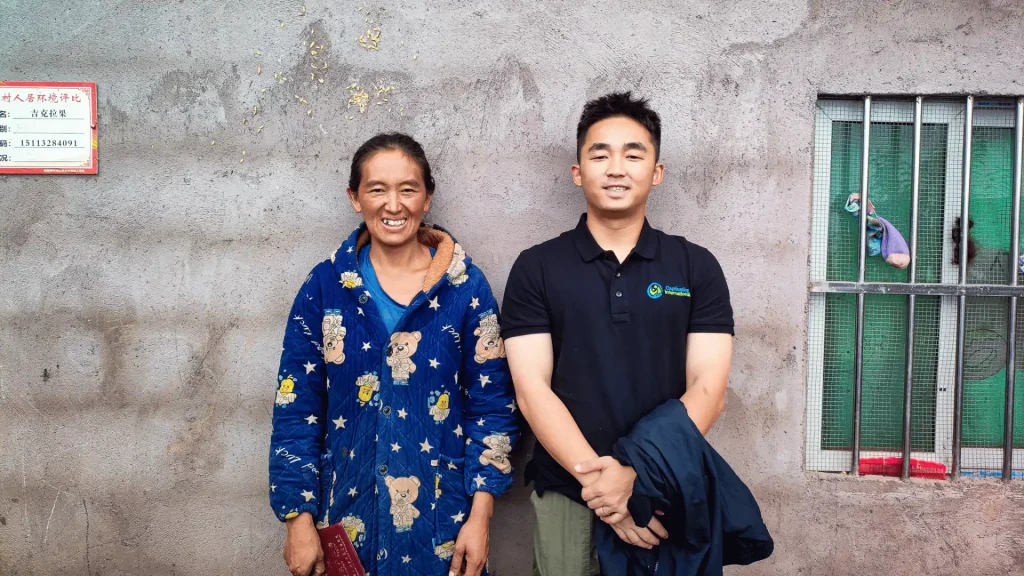
When we arrived at her home, she was already waiting for us at the entrance. As we stepped out of the vehicle, she warmly shook our hands and spoke to us in Yi. Since no one in our team spoke the language, the village leader happily translated it for us. He said that she was expressing her gratitude.
We walked towards her home and entered a courtyard. There, we already saw her home—a humble home with rows of dried corn and farming tools on the corners. In the center, a clothesline was strung with laundry. Although ordinary, there was something pleasant and peaceful about that sight. It showed the authenticity and essence of Jiduo and her family’s daily life.
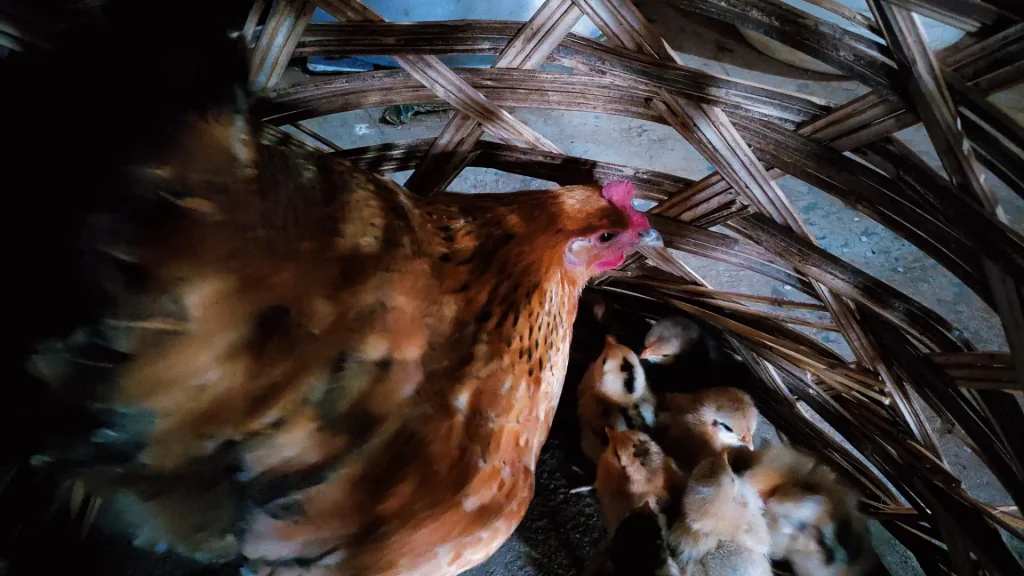
During our conversation, we learned that the family’s income primarily relies on crop cultivation and livestock rearing. The chickens we gave her were very well fed and were housed in a chicken coop that she cleaned regularly. She opened up the coop for us and picked up a chicken, beaming with pride at how the smallest had already weighed 8 jin while the larger ones were around 9 jin. The joy in her face is very infectious, so we did not realize that her energy made us smile happily with her.
When we were talking about the Chicken Farming program, the village leader translated something that she said: “Will you be providing more chicks in the future?” with a hopeful gaze in her eye. We exchanged glances and thought of a way to respond. We said politely, “The goal is to teach you how to raise these chickens scientifically. We also want you to improve your rearing skills so you can help yourself increase your household income and quality of life.”
When the leader turned back to her to tell her what we had just said, she immediately shook her head and told him something in her language. She said,
“Oh, no, I am not asking about the chicks. Those you gave us are already excellent—far better than what I have ever bought before. They grow faster and are easier to raise! But my question is, will you continue to help other women like me? I have learned so much and I hope other women experience the same!”
When the leader translated this, our hearts warmed even more. We said that, of course, we will continue what we do! That answer satisfied her. She later said, “I hope you will visit often, then! Help guide us even more. I’m sure you have a lot more to teach.”
When we said our goodbyes, the earlier drizzle now turned into rain. In many cultures, rain is considered a good omen and a blessing—a very poetic end to a profound encounter we had with our beneficiary. We realized that this is one of the successes of teaching someone how to fish: they take the learning for a lifetime, and just yearn to learn more.
Our Partners

Be a Part of the Solution
By supporting the Chicken Farming Program, you help provide essential training, resources, and a sustainable source of income for families in need.
Empower them today.