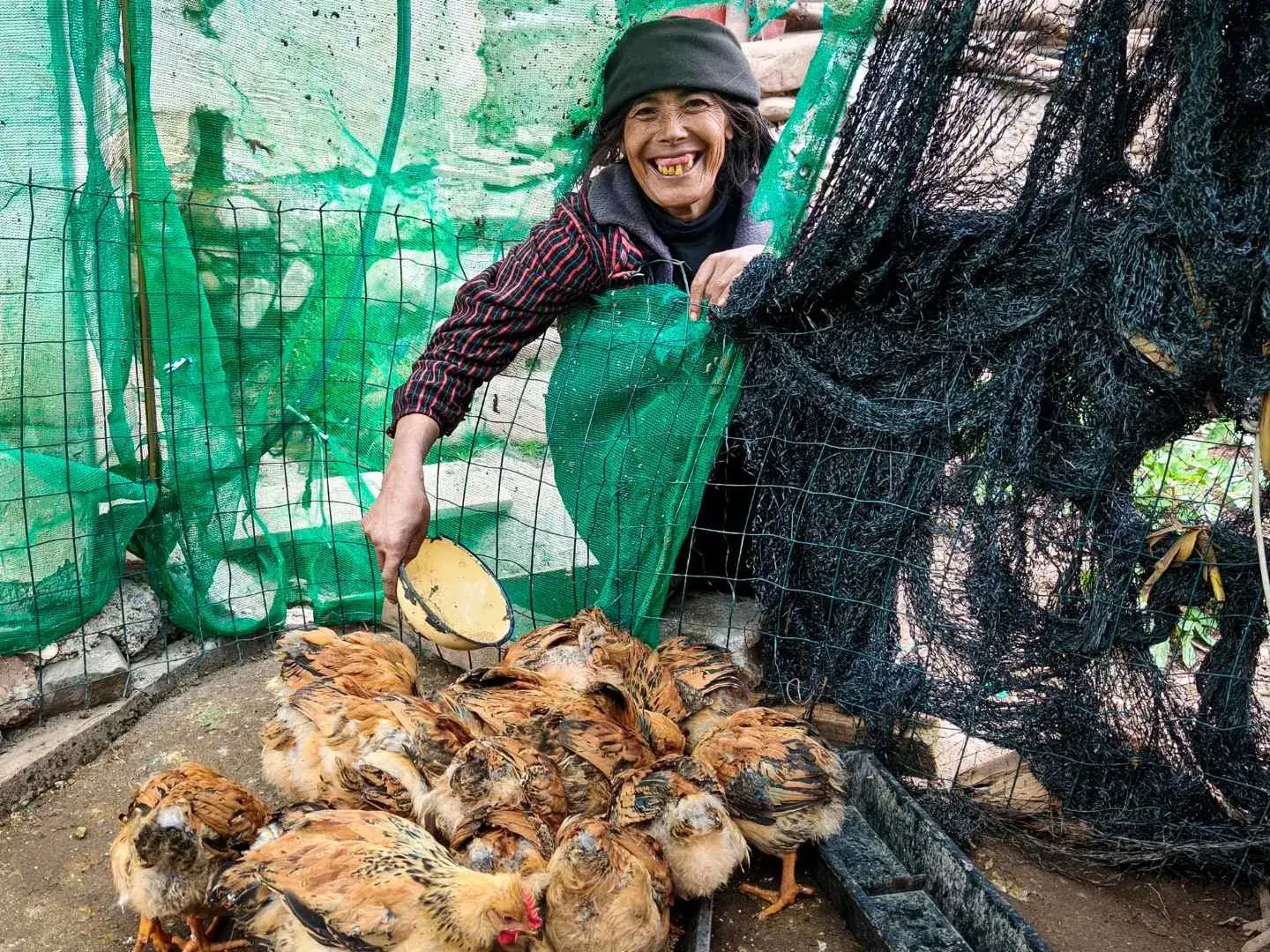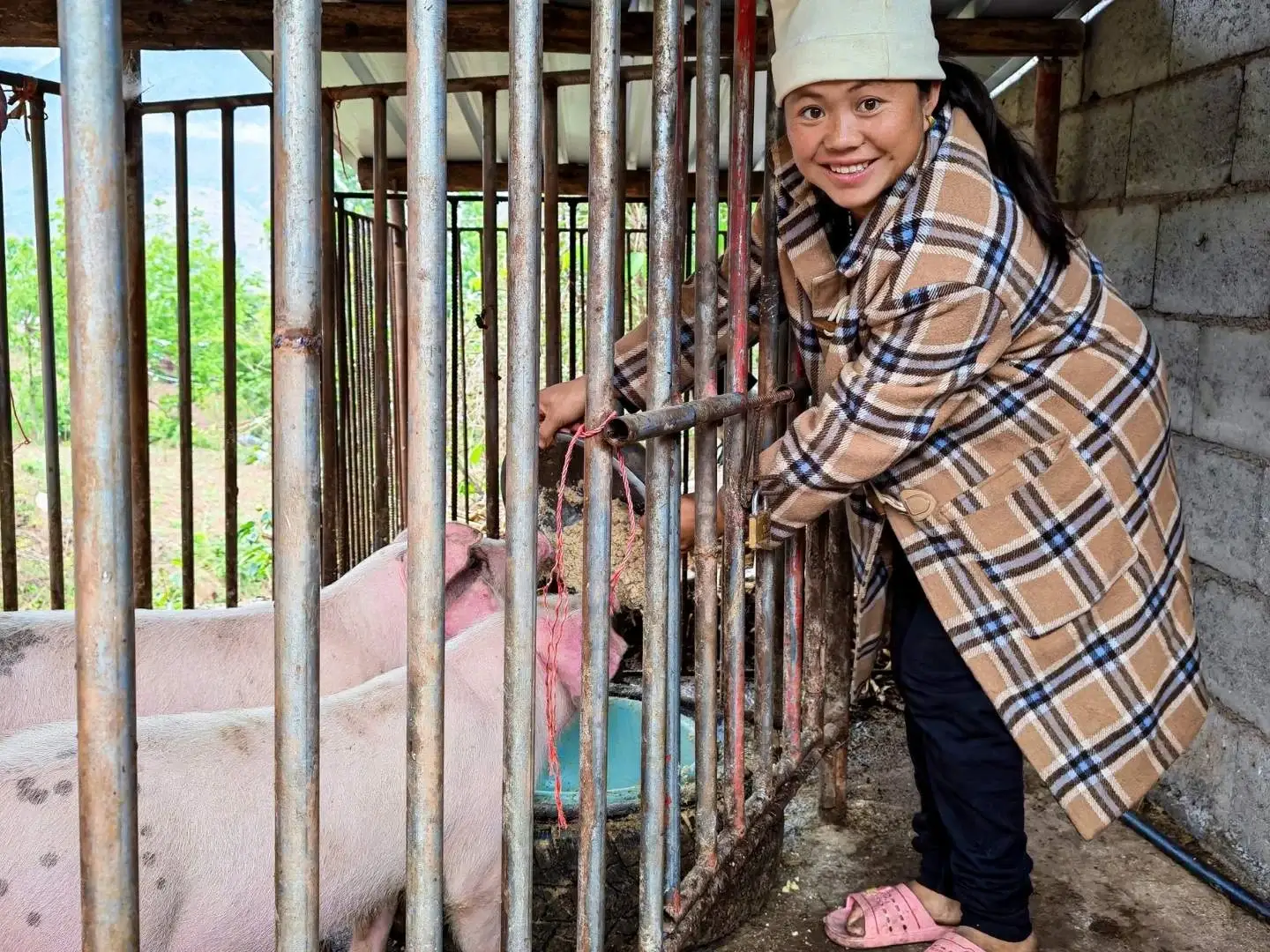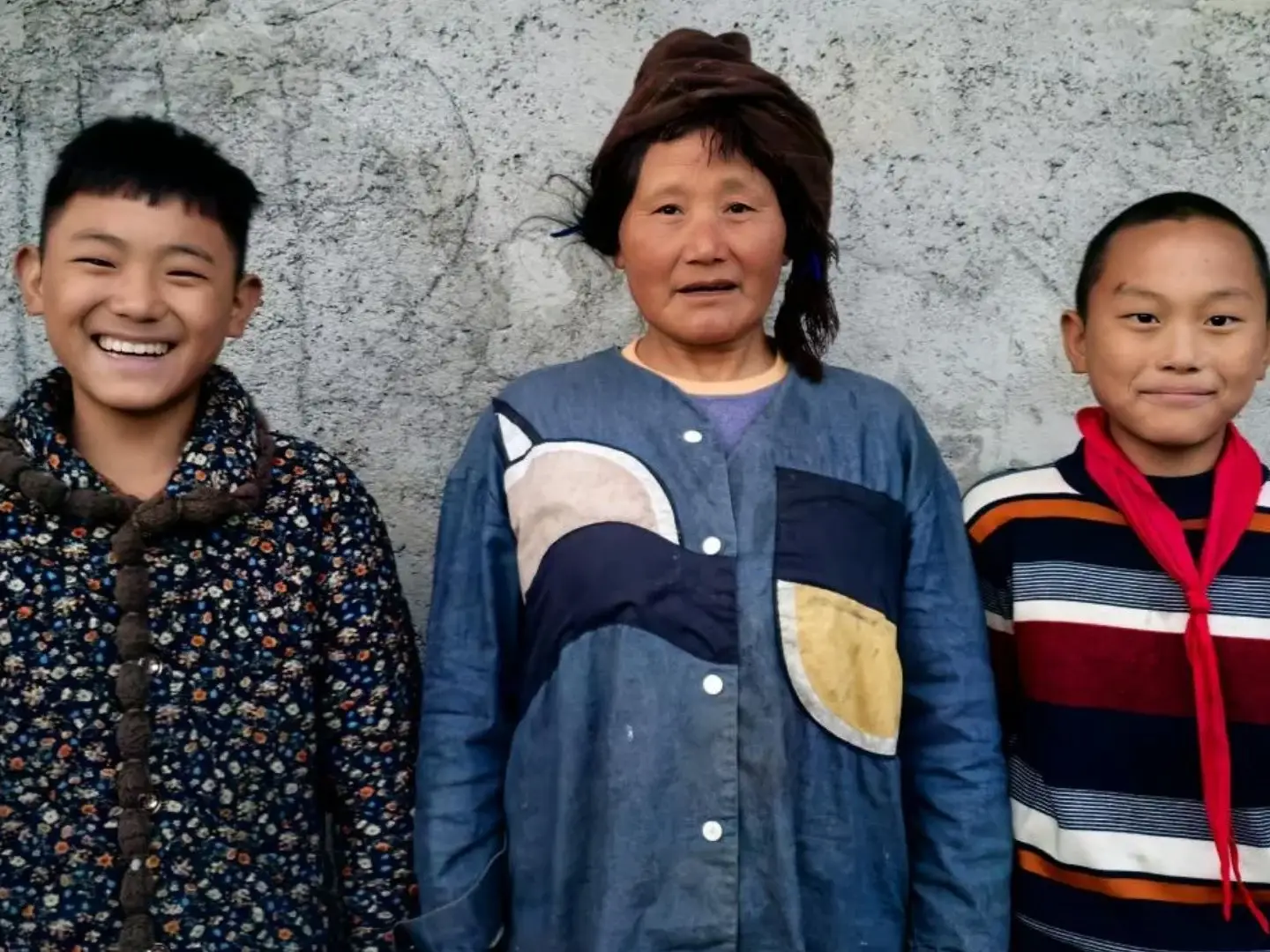
Our Pig Farming Program aims to increase families’ overall income and ensure they can sustainably support their children’s education and well-being. Through this initiative, we hope participating households can earn an additional CNY 5,000–8,000 (USD 700–1,120) per year through pig farming.
Dimo Wuji lives with her husband and three children in a small home built in 2012, funded entirely by the family at a cost of about CNY 11,000 (USD 1,550). Their annual household income averages CNY 39,000 (USD 5,490), coming from a mix of farming, livestock raising, and her husband’s work abroad as a laborer.
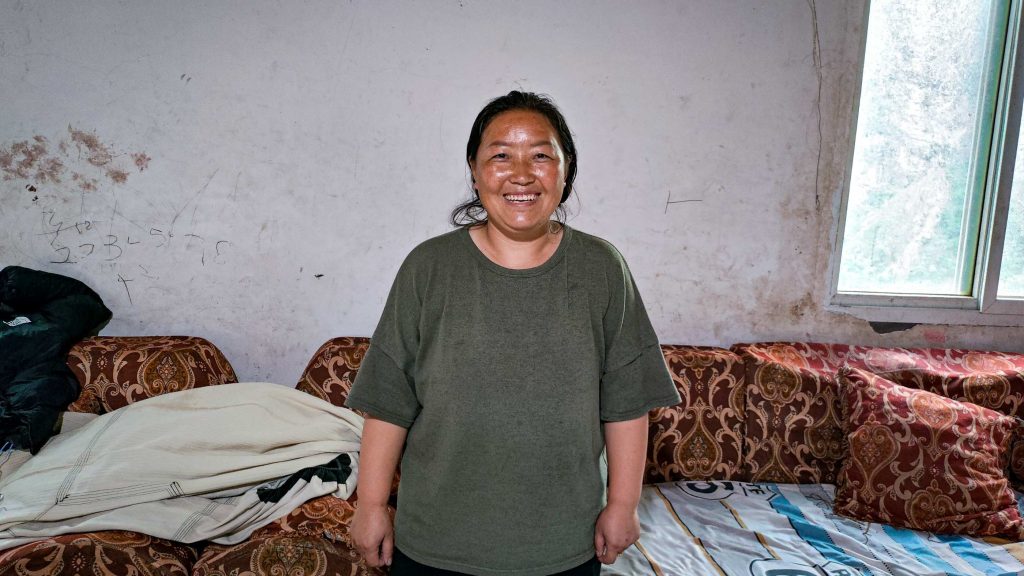
The family cultivates 5 mu of farmland, mainly planting sugarcane, corn, and peanuts. Each year, they harvest roughly 16,000 jin of sugarcane, 2,000 jin of corn, and 500 jin of peanuts—bringing in around CNY 17,000 in crop sales. They also raise 15 lambs, 4 pigs, 15 chickens, and 3 calves, earning about CNY 7,000 yearly from pig sales and another CNY 5,000 from sheep.
Dimo’s husband works away from home, earning CNY 5,000 per month, though only about CNY 10,000 of that income reaches the household annually due to living and travel costs. While these sources help meet basic needs, the family still faces financial strain. Their yearly expenses reach CNY 34,000, with CNY 15,000 dedicated to their children’s education, CNY 7,000 to Dimo’s medical bills for chronic back and head pain, and CNY 10,000 to daily household needs. With little left for savings, a single illness or crop failure could push the family into deeper hardship.
When our team visited, Dimo welcomed us warmly. She was sweeping the yard as her daughter washed dishes nearby—a humble yet lively scene that reflected her warmth and humanity. The pigpen, clean and neatly maintained, housed several strong and healthy pigs. “These are the pigs we received from the project,” she said proudly. “They’re growing so fast! One already weighs about 70 jin (35 kg), and another about 50 jin (25 kg).”
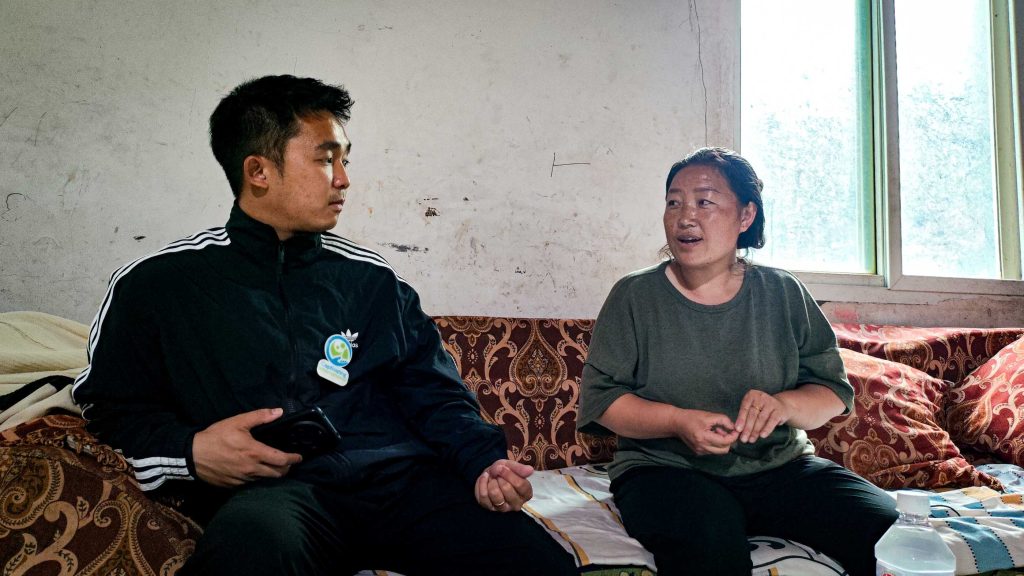
Before joining the program, Dimo raised pigs using traditional methods and often faced loss. “We didn’t know the right way to feed or care for them,” she shared. “Sometimes they got sick, and one out of every two would die.” After attending our pig-farming training, she learned new practices—cleaning the sty daily, disinfecting with lime, separating feed and water, feeding at set times, and keeping the pigs warm during cold months. “Now they’re healthier, their appetite is great, and they rarely fall ill,” she added.
The difference has been life-changing. “The support you gave is more than just piglets and feed—it’s hope and knowledge,” Dimo told us. She now feels confident in her ability to earn income through livestock farming and plans to expand her pigsty next year. “Even if I can’t do heavy fieldwork anymore, I can still raise pigs and support my children’s education.”
As we said our goodbyes, Dimo stood by her gate, smiling in gratitude. Her story represents countless hardworking families who, through small but sustainable opportunities, are rewriting their futures with dignity that came with growth.
Our Partners

Be a Part of the Solution
By supporting the Pig Farming Program, you help provide crucial training, resources, and sustainable income opportunities for families in need.
Empower them today.