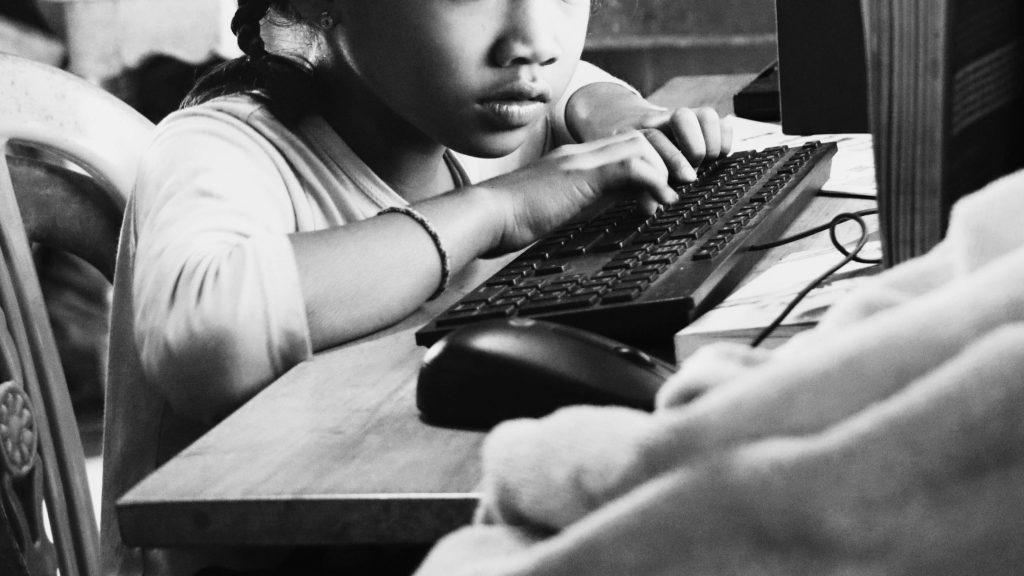
In recent decades, Information and Communications Technology (ICT) has developed so rapidly, it has changed the way we connect with our loved ones and interact with strangers. The early days of the internet were exciting and full of hope, but we may not have foreseen how this technology could increasingly harm the vulnerable in more “techy” ways. Online Sexual Abuse and Exploitation of Children (OSAEC) is a crime that is globally affecting many young and innocent lives now. It is the use of ICT to exploit children—a form of child abuse that takes place in online spaces.
When the rest of the world relied heavily on online connectivity during the pandemic, so did pedophiles. There has been an increase in online communities that dedicate their cause to Child Sexual Abuse or Exploitation Material (CSAEM). In 2021, a single page alone had more than 2.5 million registered users of child pornography. In 2023, over 200 pages were found dedicated to CSAM.
But how does it stop? The internet is a very democratic place, and it is more difficult to identify perpetrators there than in ‘real life’. In the age of anonymous and faceless accounts, how do countries protect against OSAEC?

OSAEC Policies: International Frameworks
United Nations Convention on the Rights of the Child (UNCRC)
Strengthen policy frameworks, enhance data collection and sharing, empower communities, foster partnerships, and promote technological innovation.
UNCRC is one of the major treaties that combat child pornography around the world. It is a legally binding agreement that outlines the rights of children. 196 states out of 171 have ratified the UNCRC in 1990—making it effective in most countries. While it was adopted by the UN General Assembly in late 1989 and legally bound in 1990, its child protection policies remain relevant in the ever-developing digital age.
Article 34 of the UNCRC protects the child from:
- The inducement or coercion of a child to engage in any unlawful sexual activity.
- The exploitative use of children in prostitution or other unlawful sexual practices.
- The exploitative use of children in pornographic performances and materials.
Council of Europe: Lanzarote Convention
Although the UNCRC had started a treaty in the early 90s, the Lanzarote Convention (October 2007) is the first international convention to tackle child sexual abuse in digital contexts and child sexual abuse within households. It is key to our present-day OSAEC policies due to its first mandates of criminalizing grooming, exploitation, and pornography even before in-person meetings between the victim and their perpetrator. The treaty sets legal obligations, preventative education, offender monitoring, and professional safeguarding of children.
It is presently ratified by 48 states across Europe and North Africa (Tunisia).
We Protect Global Alliance
The We Protect Global Alliance to End Child Sexual Exploitation Online was launched in 2012. It is an alliance between We Protect and the Global Alliance Against Child Sexual Abuse Online due to their shared goal to end sexual exploitation among children. Currently, 98 countries, 67 civil society organizations, 53 tech companies, and international organizations have partnered with the We Protect Global Alliance. Through these partnerships, they were able to align their advocacy efforts beyond borders through their two frameworks:
We Protect Global Alliance Frameworks
Global Strategic Response
This response goes beyond policy. It recognizes that cultural aspects and grassroots approaches are necessary to eradicate these cases. It provides a roadmap for country leaders to implement practical actions to minimize cases of online sexual abuse through:
- Strengthening policy frameworks
- Enhancing data collection and sharing
- Empowering communities
- Fostering partnerships and;
- Promoting technological innovation.
Model National Response
Like Global Strategic Response, Model National Response framework also focuses on policy, criminal justice, enhancing data collection, and empowering communities. The main difference is how they help countries with its strategies to implement effective responses in their local communities through a maturity model and a self-assessment tool (both written in various languages like French, Arabic, Portuguese, and Spanish). Countries like the UK, Australia, and Philippines are known to adopt this framework in their policies and actions.
OSAEC Policies: Leading Countries’ Local Laws
Countries Leading the Fight Against OSAEC
While global treaties and policies are an excellent start, it is still highly necessary to adapt localized efforts in every country to ensure more effective efforts in enacting laws protecting children online. OSAEC is a borderless crime, and countries could learn a thing or two from different states’ local policies.
1. Philippines
Anti-OSAEC Law (RA 11930)
RA 11930 in the Philippines is also known as the Anti-OSAEC and Anti-CSAEM addresses the locally pervasive issue that continuously victimizes minors in the Philippines. Its enactment in July 2022 helped penalize various acts of production, promotion, broadcasting, possession, and distribution of CSAEM. It also holds local Internet Service Providers (ISPs) accountable for failing to take down or block access to CSAEM—a truly commendable initiative that not only holds private individuals accountable, but also companies that make accessing CSAEM possible.
While considered as the most prominent law in the country against OSAEC, it complements these two policies:
Anti-Child Pornography Act (RA 9775)
RA 9775 was passed in 2009, 13 years prior to RA 11930. The Anti-OSAEC Act enhances the weight of penalties under the Child Pornography Act for introducing newer mechanisms to add weight to the legal repercussions of online exploitation.
R.A. No. 7610 (Special Protection of Children Act)
RA 7610 (enacted 1992) is the first comprehensive law in the Philippines that define and penalize various forms of child abuse, exploitation, and discrimination. It initially laid the groundwork for recognizing the commercialization of sexual exploitation in the Philippines. Through OSAEC, RA 7610 now has a digital perspective of various levels of child exploitation.
Beyond policies, the Philippines has more anti-OSAEC efforts that focus on on-ground prevention efforts, partnerships, and other measures.
- Cybercrime law collaboration with NBI and PNP.
- Partnership with NGOs like IJM, ECPAT, and UNICEF.
2. United Kingdom
Online Safety Act of 2023
The Online Safety Act 2023 is a policy that regulates online content by mandating tech companies to detect and prevent child abuse content, or any content that could be potentially harmful to children if they were to access it. CSAM materials include AI-generated media, a recent concern among parents around the world.
Those who fail to comply could be fined up to £18 million or 10% of their annual turnover. Moreover, the UK government is in coordination with Ofcom, the regulator for communications services in the UK, and the National Crime Agency to effectively enact the policy.
3. Australia
eSafety Commissioner and the Online Safety Act of 2021 is the world’s first regulator with statewide authority over online harms.
eSafety Commissioner serves to promote online safety and reduce harm from abusive, harmful, or illegal content online through handling cyberbullying and cyber abuse, taking down harmful content, conducting research about online harms and trends, and providing educational resources for safe online navigation while;
The Online Safety Act of 2021 builds on the original 2015 Act, which broadly addresses various forms of online abuse. It is composed of two phases: Phase One focuses on the most harmful content, like sexual exploitation, pro-terrorism, and extreme violence; while Phase Two targets materials including pornography, self-harm, suicide, eating disorders, and gambling, etc. This Act compels companies to take down the following harmful content within 24 hours after reporting.
4. Sweden, Netherlands, Norway
25% of OSAEC buyers come from Sweden, next to the USA. Despite this, they have strong child protection policies and proactive law enforcement. They combat child exploitation through the ECPAT—a non-government organization, by their 24/7 youth helpline.
The Netherlands criminalizes CSAEM, grooming, and exposing children to sexual acts. They also ban revenge porn and doxing by taking them down, and ISP blocking. Moreover, their police departments have specialized units that specifically tackle child sexual abuse.
Norway considers raising the social media age of consent from 13 to 15 years old to prevent online abuse. Moreover, its penal code prohibits hacking, data interference, and child exploitation, according to its National Criminal Investigation Service (Kripos). In 2017, Kripos launched the Police2Peer operation to target peer-to-peer networks that share child abuse material. They also have national hotlines for this specific crime.
What Other Countries Can Learn
Learning from these model countries that actively protect their children against these forms of abuse, what can other countries learn from them?
- Enact specialized laws targeting OSAEC, not just general cybercrime or child abuse laws.
Enacting laws about general cybercrime is a good start, but when you target too many, you may overlook some pressing problems. - Mandate accountability for tech companies, ISPs, and social media platforms.
To work smarter and not harder, start from the platforms. Partnering with these entities could reduce efforts in targeting individuals and could help focus on other ways of combating OSAEC. - Create dedicated cybercrime and child protection units with technical capacity.
Make it accessible for the people to seek help and justice. Sadly, some law enforcement officers are still not trained to handle cases like these. - Partner with NGOs and international bodies like Captivating International.
Unsure of where to start? Tap your local nonprofit organizations for collaboration! - Invest in public education and parenting support for digital safety.
To eradicate OSEAC, education is the best first solution. Again, prevention is better than cure. Conducting seminars, disseminating materials, and providing training are impactful ways to reduce this crime. - Establish reporting hotlines and child helplines
Make reporting accessible to the public! Having an accessible way to report this crime gives victims more confidence, and the perpetrators’ confidence less.
OSAEC is a borderless crime
While strong parental guidance in navigating cyberspaces is a child’s first line of defense, every nation must still require cooperation, legislation, and vigilance. Various states have shown that it is possible to author laws that highlight child safety in cyberspaces. Governments, companies, and communities must act in sync to ensure that child safety is upheld among communities.
If you want to help fight OSAEC in the most vulnerable places in the Philippines, you may donate today.
DID YOU KNOW?
Simply Captivating: 2025 Impact Report
In 2025, connection stood out as the thread running through everything we do. In a world…
0 Comments8 Minutes

Child Criminal Exploitation: What It Is, Why It Happens, and How To Help
Child criminal exploitation traps vulnerable children in trafficking, scams, and crime,…
0 Comments10 Minutes
The Reality of Orphans in Nepal
In Nepal, orphaned children face high risks of exploitation and trafficking due to…
0 Comments8 Minutes
Suspicious? Here are OSAEC Red Flags To Look Out For
Online child safety matters: learn how to spot OSAEC red flags, protect kids from…
0 Comments13 Minutes

“Harmless” Posting? You Could Be Risking Children’s Online Safety
Some posts can put kids at risk. Protect children from OSAEC by keeping accounts private,…
0 Comments11 Minutes
Life After Human Trafficking? Survivor Stories and What They Need
Rescue is just the first step, survivors need safety, dignity, and the chance to build a…
0 Comments13 Minutes
What Is Child Exploitation? Definition, Types, and How To Help.
Child exploitation takes many forms: sexual, criminal, labor, online. Learn the signs and…
0 Comments9 Minutes
Simply Captivating: Our 2024 Impact Report
In 2024, your support directly impacted 12,000+ lives across Nepal, China & the…
0 Comments10 Minutes
Happy Women’s Day! Now What?
International Women’s Day is more than a day—it’s a movement for equality. Let’s educate,…
0 Comments11 Minutes