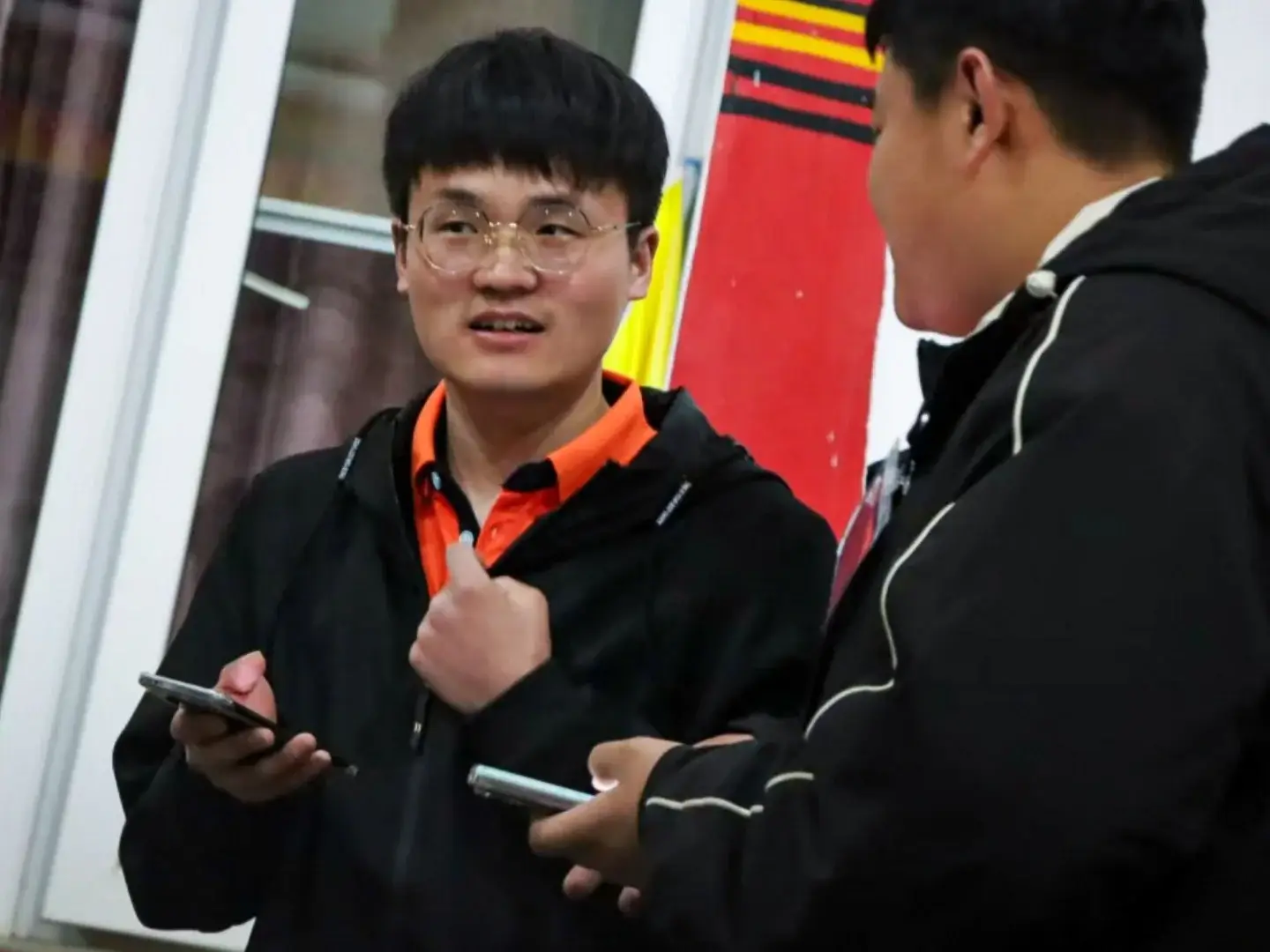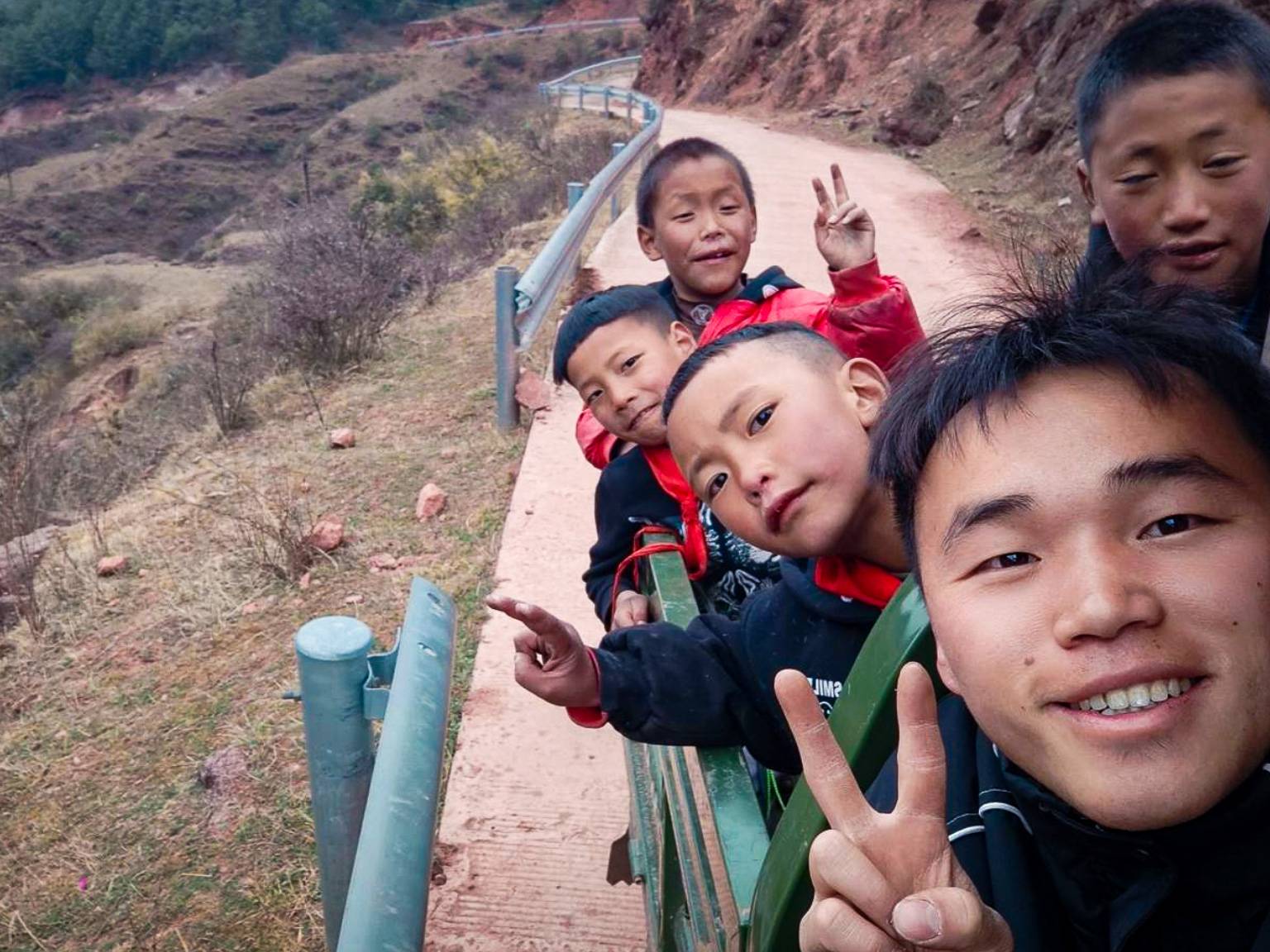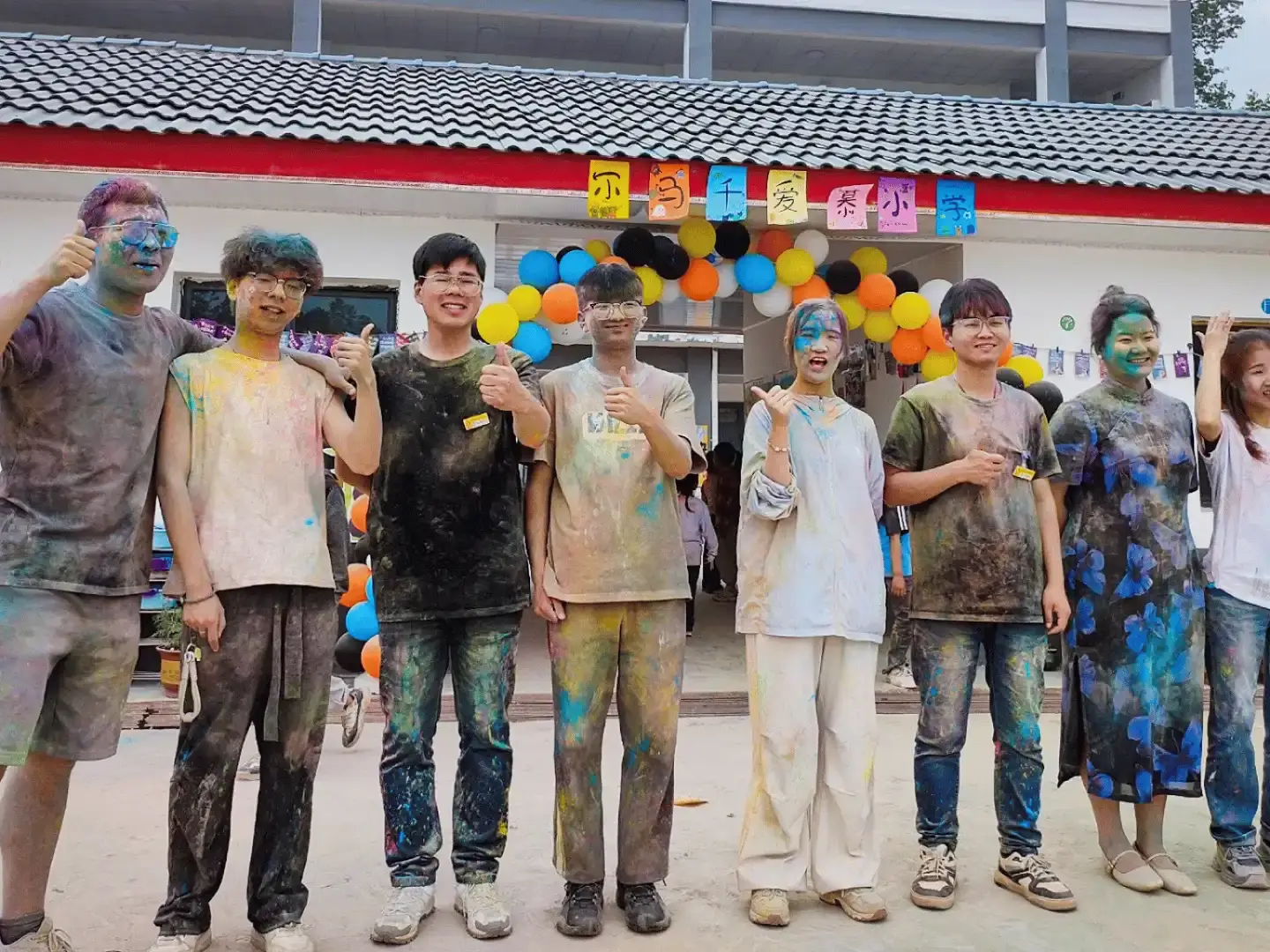
To bridge the education gaps of children in remote villages in China, we started our Send A Volunteer Teacher Program for newly graduated teachers and retired educators. One of these is Jiang Zhigang (44), a Chinese Language, Physical Education, Logistics Management, and Homeroom teacher of 4th graders. He began teaching in September 2024, and we are fortunate enough to hear his story through a letter he sent us.
I am Jiang Zhigang. At 44, the wrinkles on my face have been carved into rings of time by the mountain wind inside the weathered classrooms. My colleague, Teacher Wang Ran, often jokes that we’re the “Chinese and Math twin stars” — he teaches the kids how to solve equations, while I guide them in reciting “Spring slumber knows no dawn.”
In our class of 29 children, there are 14 mountain camellias and 15 little green pines, all rooted in the clouds at an altitude of 2,000 meters.
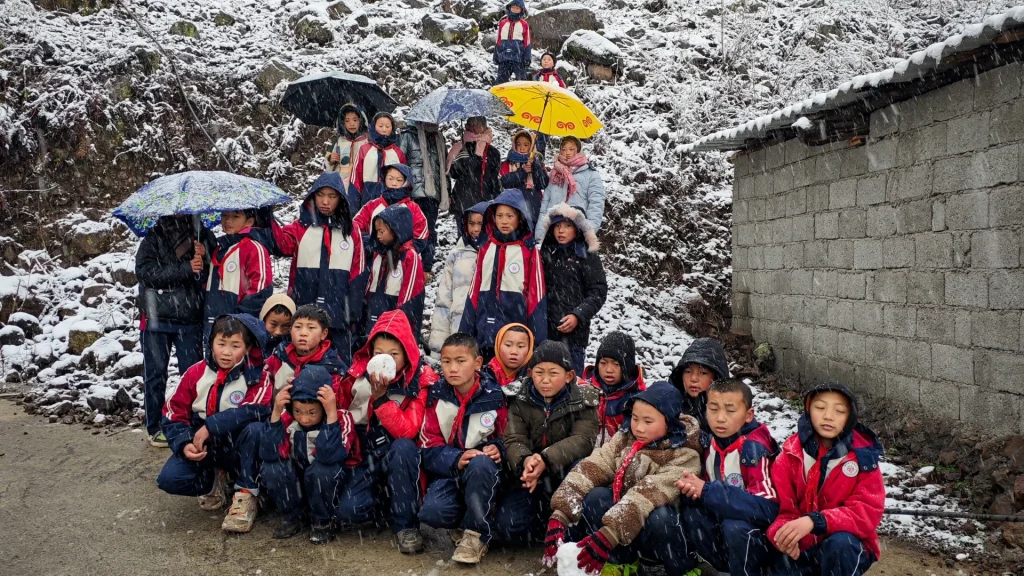
When the semester began on February 18, Meigu’s weather was still quite fair. Then in March, a heavy snow came overnight, blanketing the mountains and bending the walnut trees low. The next morning, as I opened the door, I saw 29 little hands pressed against the frosted windows, their noses leaving flower-like prints on the glass.
“Come on, let’s have class in the snow!” I grabbed the bamboo pointer from the desk. The kids froze for a second — then burst into cheers. A student leapt up with a loud “Aow!” — his Yi accent blending with Mandarin as it echoed through the room: “Let’s go play in the snow, Teacher!” Normally the rowdiest monkey in class, his eyes were gleaming like a wolf’s in the snow as he dashed outside first.
The snowfield became our natural canvas. I led the kids in reciting “The night wind comes, like spring overnight…” while the boys formed teams to make snowballs — most of which ended up stuffed down my collar. Out of nowhere, one tackled me from behind, and we rolled together into the snow, startling a blue whistling thrush from the bamboo grove.
“Hello, Teacher Jiang!” shouted a student, launching a full-on “final attack” — a dozen snowballs flew in from every direction. Another one even shoved his freezing red hands down the back of my neck.
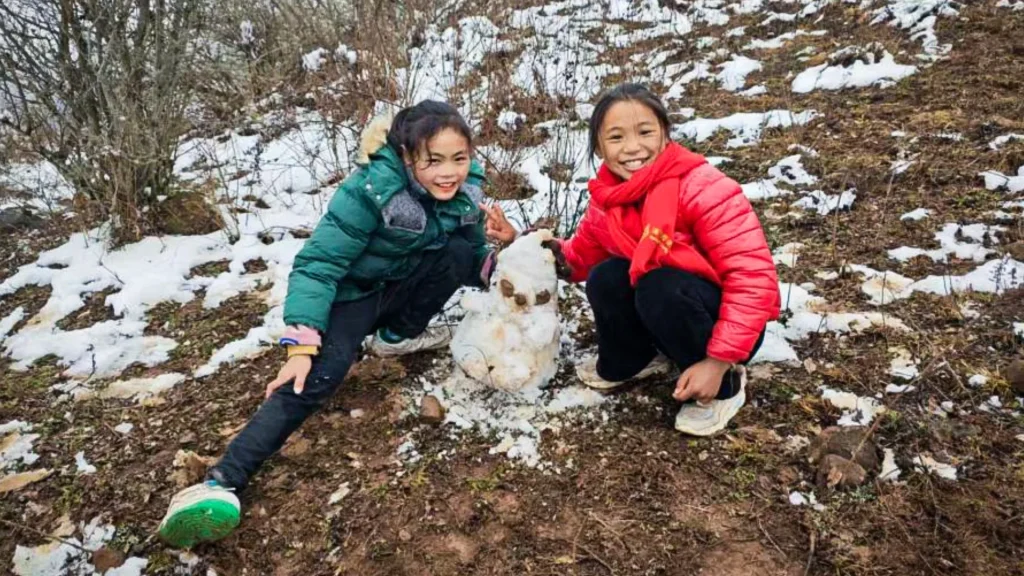
Not far away, two students were crouched under a tree, building a snowman. They gave the snowman my wool hat and used two twigs for arms. I pulled out my phone and captured the moment: 29 little red faces grinning in the snow.
After the snow fight, I gathered the children beneath the old pagoda tree.
“Today, no Chinese class,” I said, pulling a frozen stick of chalk from my pocket.
“Today, we write: ‘Little Snow Artists’.”
One student drew her wobbly snowman on the page. Another added smiling faces to every snowball. Even the shyest one wrote in her essay: “Today, there was snow in Teacher Jiang’s wrinkles. It sparkled like the mountain stream.”
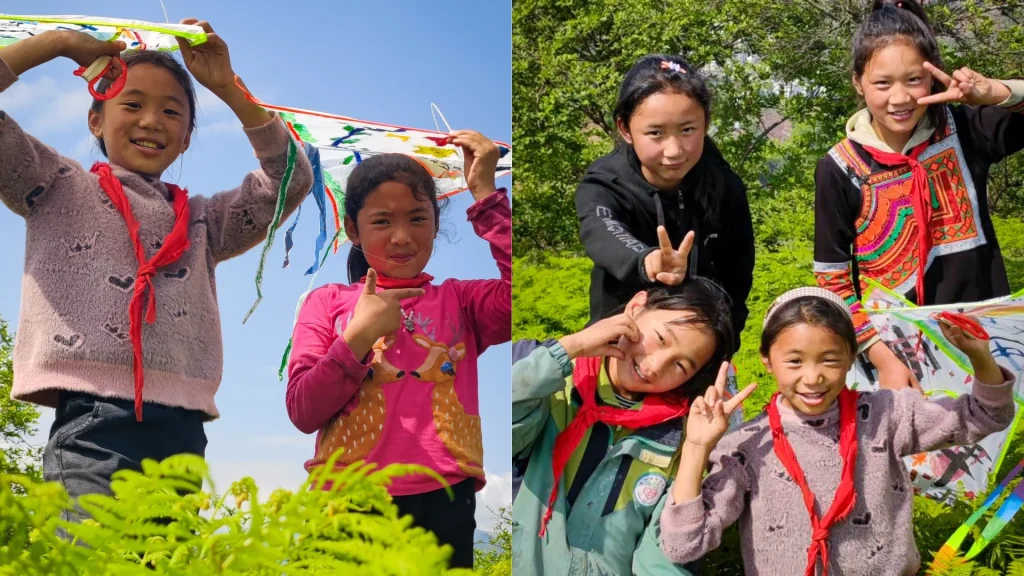
After the spring equinox, the hills were dotted with blooming dandelions. I took the children to fly kites. One led the way with his handmade goose-shaped kite, but it flew like a drunken butterfly and dove headfirst into a sour jujube bush.
A student giggled behind her hands:
“Teacher, the Hou Yi* stone is glowing gold on the mountain!”
We clambered up the slope together, and sure enough, the ancient stone stele was bathed in moonlight. The mossy cracks looked just like tear trails.
“When Grandpa Hou Yi shot down the sun,” said another, gently tracing the crack in the stone, “his arrow landed right in this fissure. My grandma said once, it even glowed gold.”
Looking at the wonder in their eyes, I suddenly understood — volunteer teaching isn’t just about helping them understand the world; it’s about forging new arrows for them, arrows made of knowledge and dreams.
The image of my student walking away with a kite on her back has stayed with me ever since.
I only hope all of them will grow up healthy, happy, and free — like kites lifted by the wind.
*A legendary archer in ancient Chinese mythology who shot down nine of the ten suns to save the world and was later deified.
Be a Part of the Solution
With your support, we can ensure that students in remote villages receive the quality education they deserve.
Help us make education accessible to all.