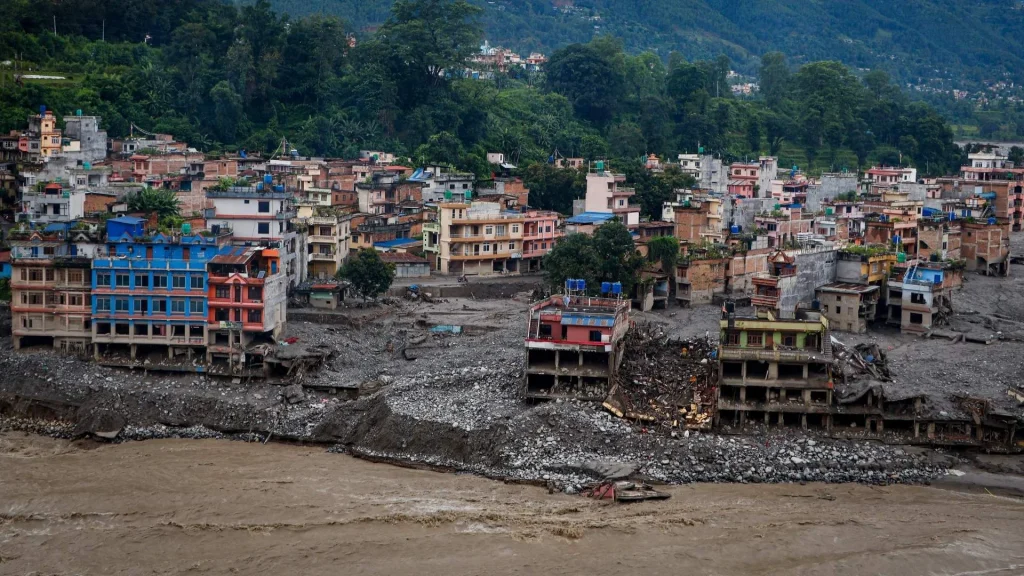
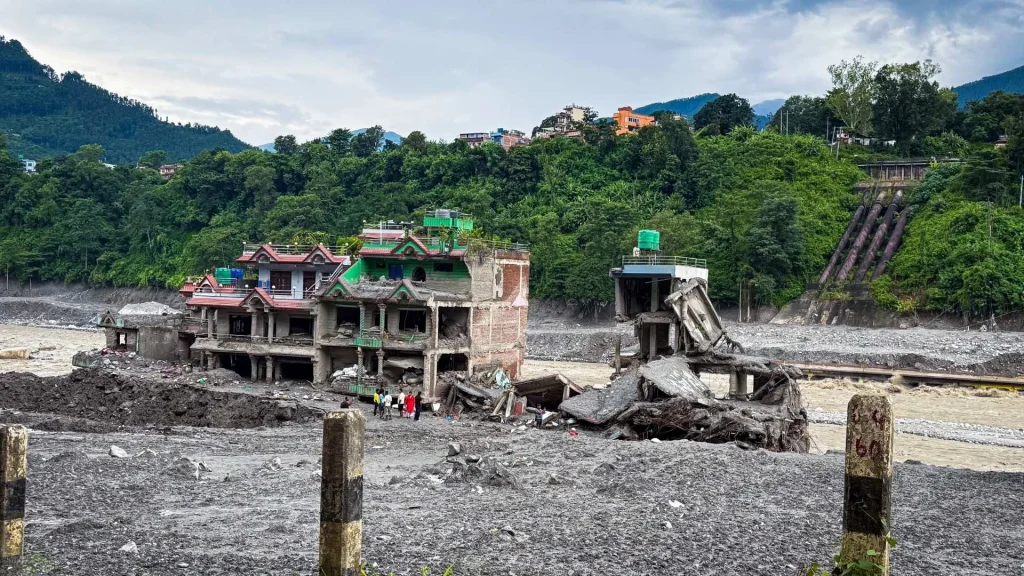
Last August 26, Nepal and China’s Tibet border experienced a massive landslide due to a 7000-foot glacier collapse near the Langtang Liriung mountain peak. With the glacier sized approximately 2000 feet wide, entire villages, roads, bridges, and hydropower facilities were washed away and covered in sludge in just minutes. Now over 1000 people have been reported dead, with thousands more missing.
None of our staff, locations, and facilities were affected by this tragedy, despite the flood epicenter being located 40 kilometers away from the Kathmandu office.
October 3, 2026 — Second Round Disaster Relief Support
Following the initial Disaster Relief Support on September 7, the 3 Angels Nepal team has completed its second round of support for 483 individuals in four different locations. Each location has a different set of needs, which the team addressed accordingly.
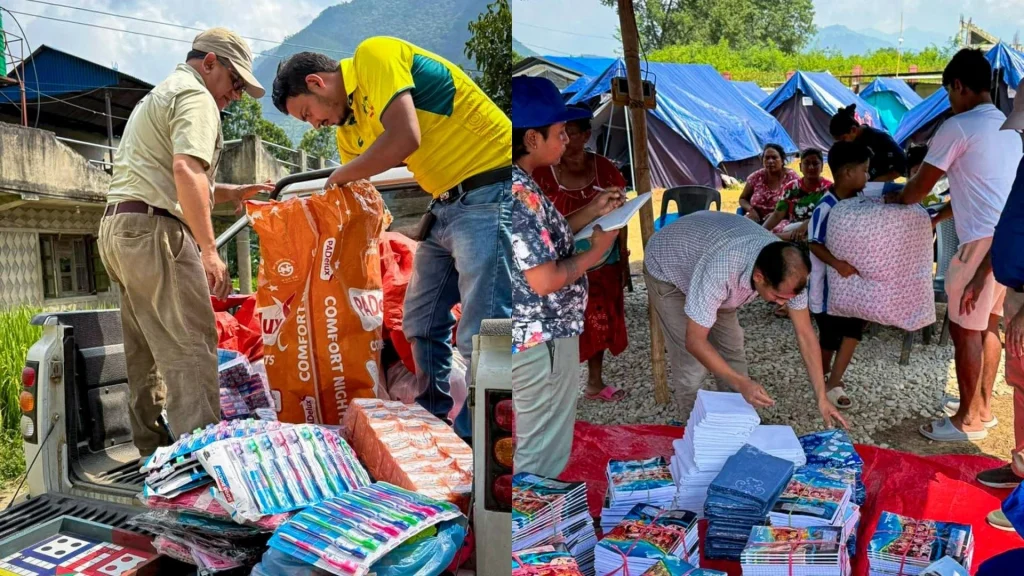
A settlement in Tupche was visited first. 15 households (69 individuals total, children included) lived in this area. Both essentials and school supplies were distributed. Essentials include quilts, quilt covers, blankets, bedsheets, shampoo, toothpaste, toothbrushes, undergarments, and sanitary pads. The children also received school supplies, notebooks, and recreational items like badminton equipment, balls, and Ludo games for learning and recreation.
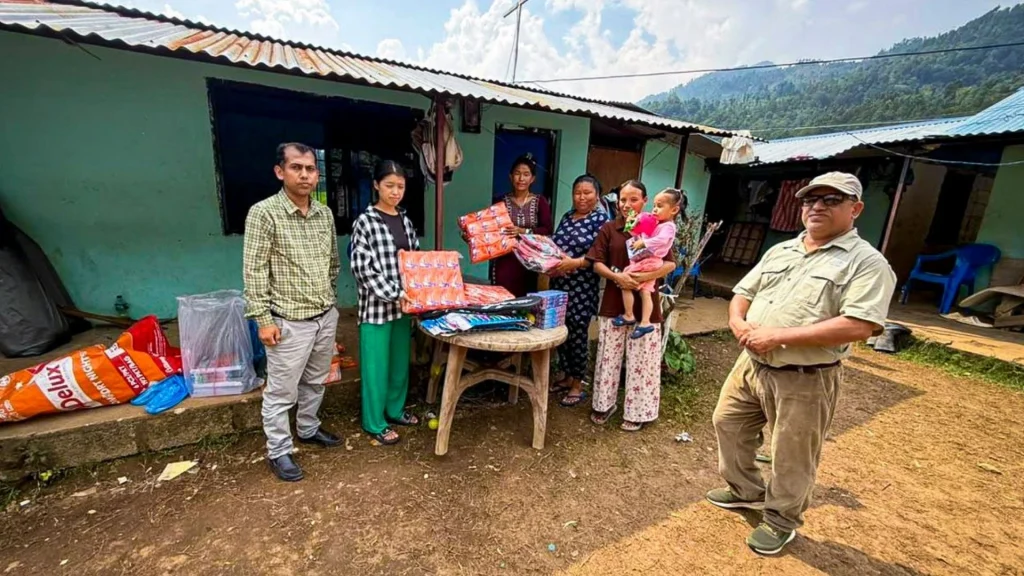
The second location was visited right after. Here, there are 25 households (90 individuals total) who also received the same basic supplies for their daily survival.
The team visited a shelter for people rescued in Rasuwa. 124 individuals are currently taking shelter there, and educational materials were provided for the children. The same materials were distributed to the last location, a holding center and its surrounding communities. In the last area, 200 students received school supplies.
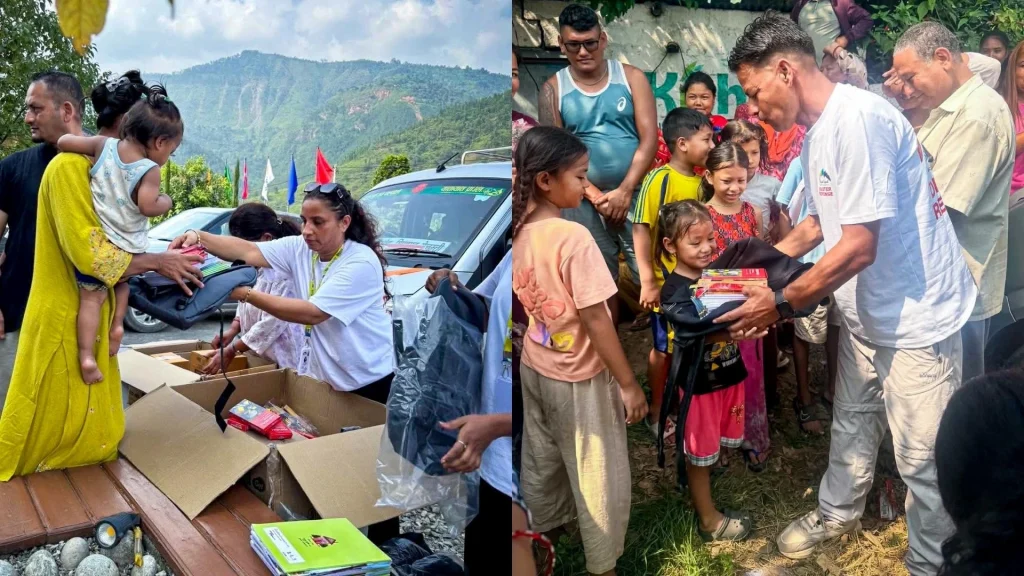
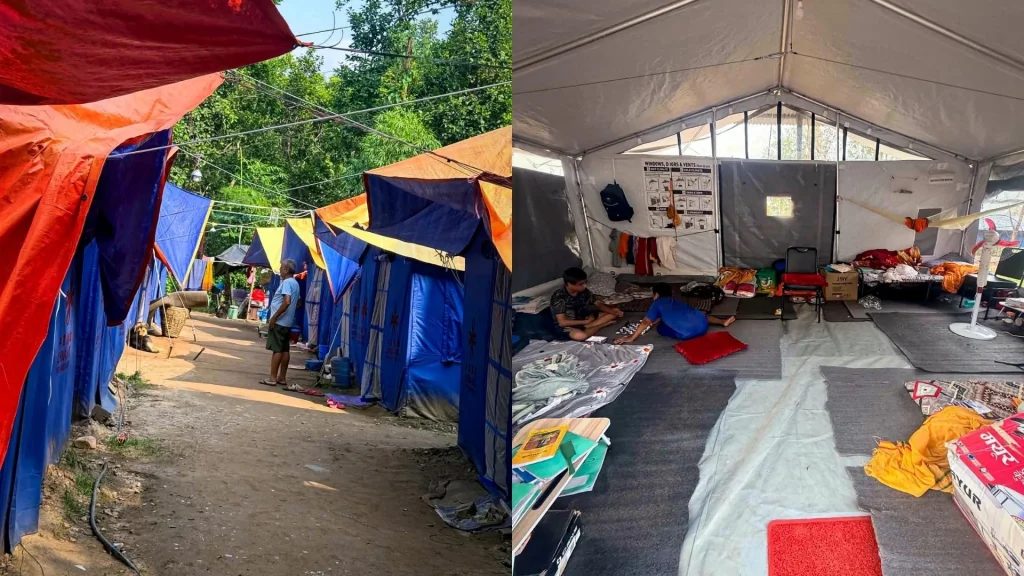
In this round of distribution, the team not only prioritized the essentials for families in those areas, despite the disaster—children’s education was also prioritized alongside recreation, hygiene, and their overall well-being.
September 8, 2026 — Water Access Restored for 50 Households:
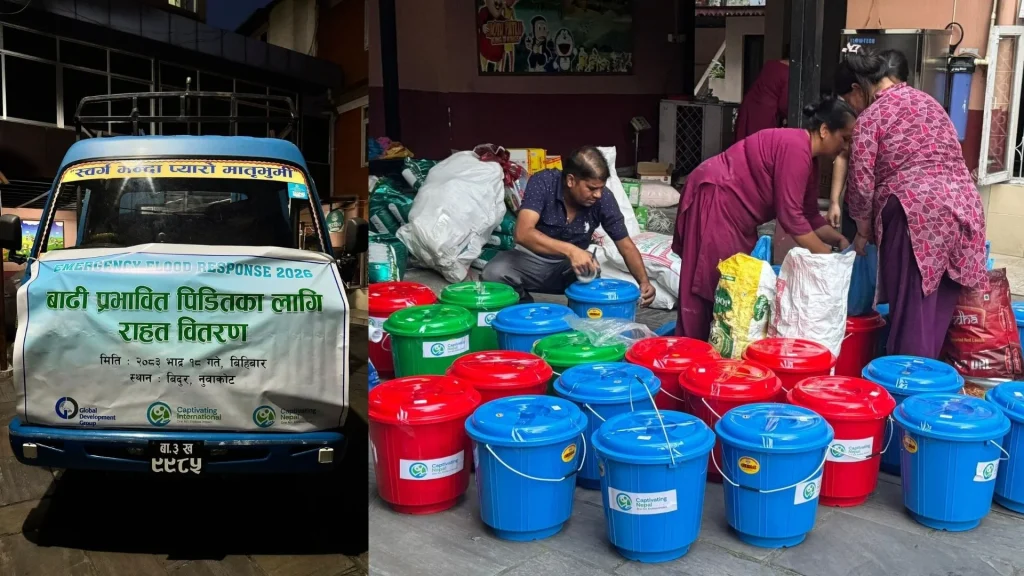
Nuwakot, Bidur Municipality, is one of the areas that suffered from the landslide. As part of Captivating Nepal’s emergency response, we distributed food and sanitary supplies to 26 households in September 3.
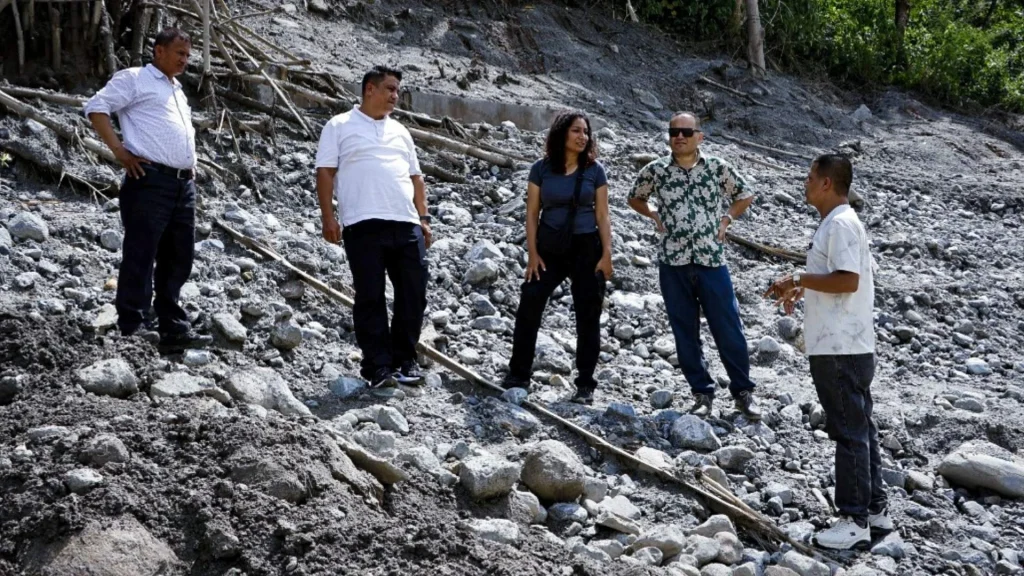
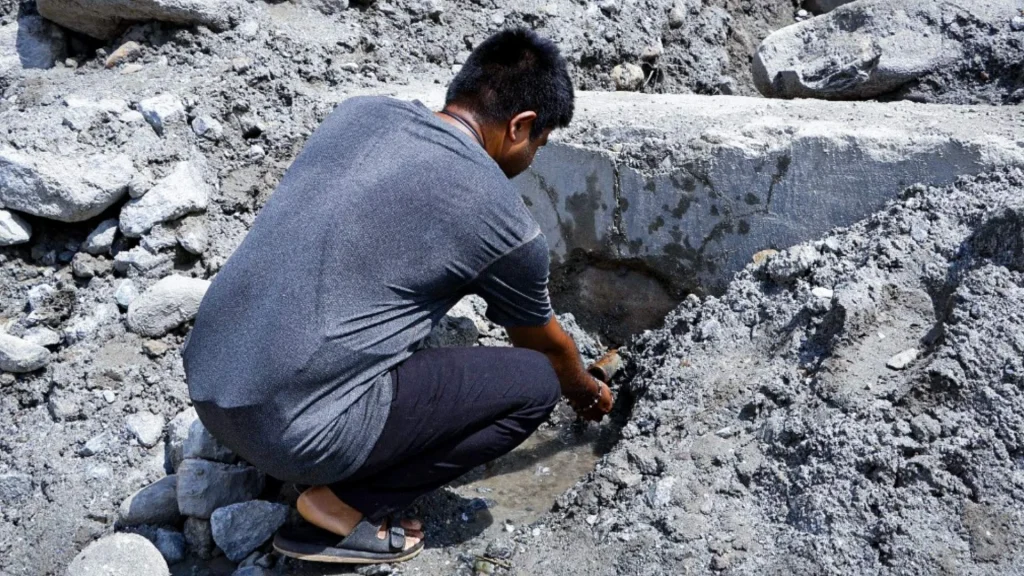
During this time, an urgent water shortage affected 50 households (approximately 200 people) in Bidur Municipality-6. They could not access their water supply because it had been buried 10 feet under the debris. To get by, the residents mainly relied on rainwater for their needs. They also traveled at least an hour to reach a nearby area to collect or buy potable and clean water.
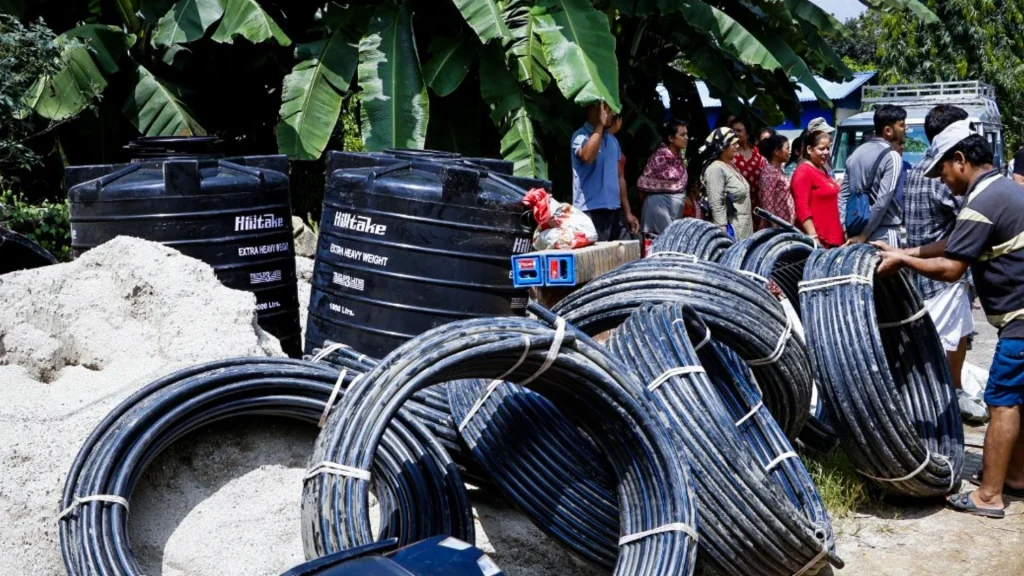
As per the municipality’s formal request, we provided them with materials worth NPR 300,000 (USD 1,945) to sustainably supply water to their area. The materials included water tanks, pumps, HDPE pipes, electrical cables, and other plumbing equipment.
After three days of work and coordination with the local authorities, the buried water source was successfully located. It is currently being collected in water tanks and distributed to the 50 households. The community members are still recovering from the disaster, but now they have less to worry about, as one of their basic needs is covered.
Relief efforts are ongoing, and we will continue updating this page as our teams and partners reach more affected families.
You may continue to donate and support our Stop Trafficking 5K Nepal Flash Flood and Emergency Relief Fund, starting at AUD 25 (USD 16).
September 7, 2026 — Relief Reaches Displaced Families:
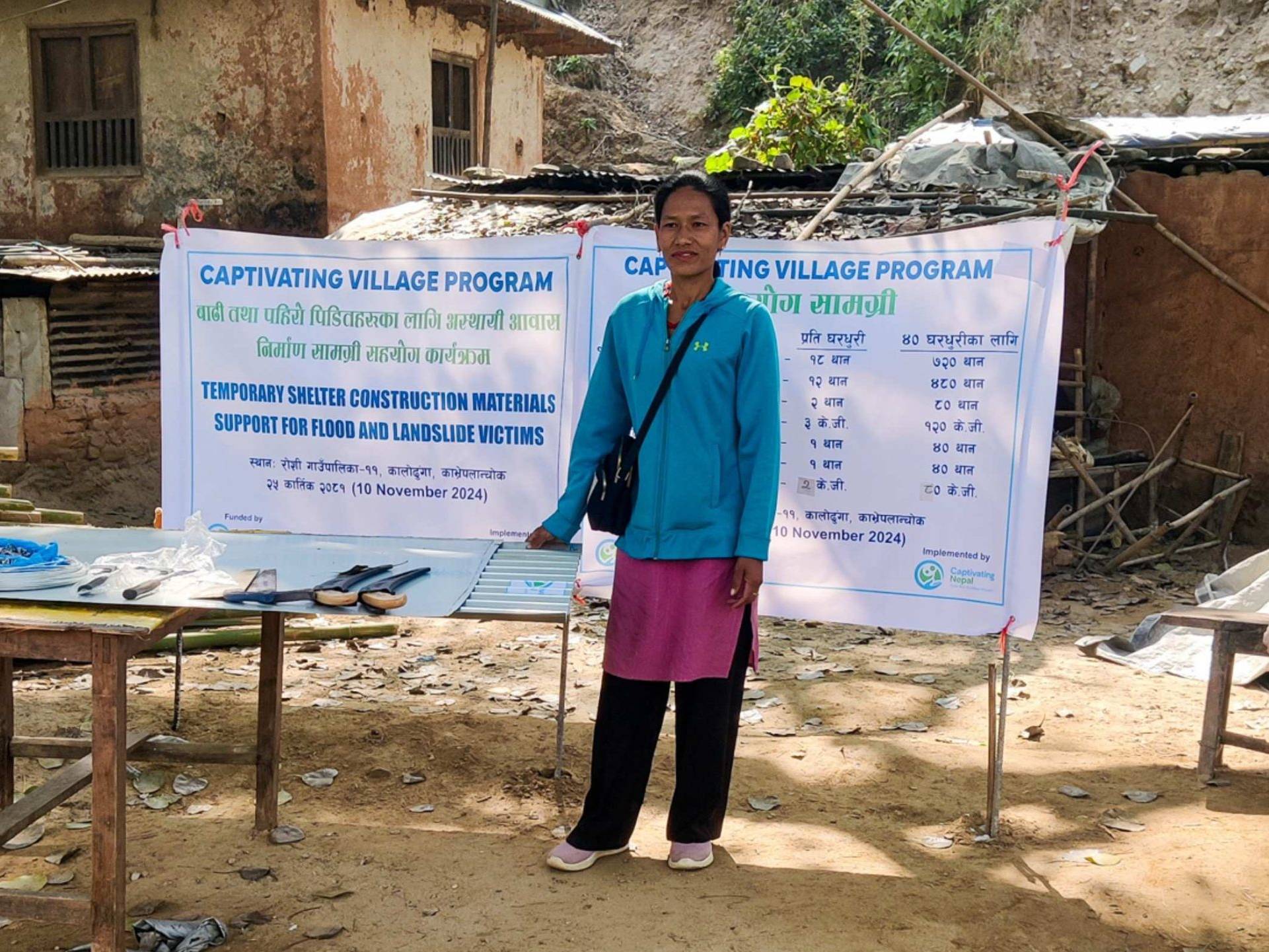
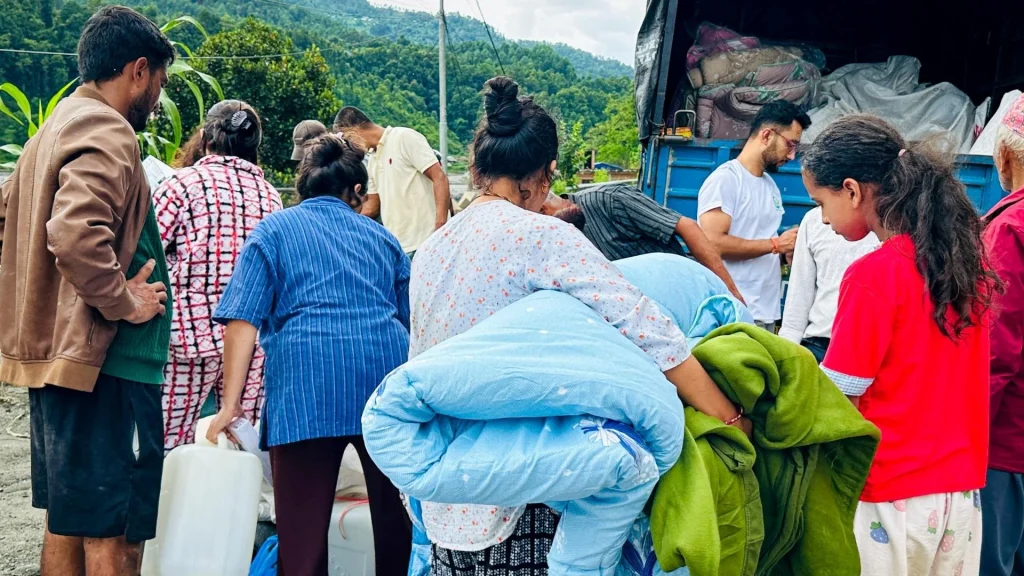
The Captivating Nepal team has completed an initial relief distribution for 26 households who were completely displaced by the flooding. The team initially received a request to support 13 families, but through collaborative mapping and verification with other organizations, it was confirmed that these families were already being assisted. To avoid duplication of relief efforts, our team instead moved to support an additional 26 displaced families who still needed assistance. Each household received a package containing essential items such as: blanket (1 pc), woolen mat (1 pc), PE foam (1 pc), mosquito net (1 pc), solar lamps (1 pc), rice (25 kg), lentils/dal (2.5 kg), flour (5kg), noodles (1 carton), cooking oil (3 liter), salt (2 kg), jerry can (1 pc), bucket (1 pc), mug (1 pc), handwashing soap (12 pcs), laundry soap (12 pcs), sanitary pads (5 pkt), ladies’ underwear (3 pcs), gents’ underwear (3 pcs), adult toothbrush (2 pcs), children’s toothbrush (2 pcs), towel (1 pc), and tarpaulin (1 pc).
Coordination
To ensure transparency, accountability, and accurate targeting of aid, the distribution team established strong coordination with key local stakeholders:
- Local Government: Consultation and formal alignment with ward presidents of Bidur Municipality officials and District Coordination committee ensured ground access and policy alignment.
- NGO Federation: Collaborative mapping and verification were conducted to cross-reference vulnerable populations and avoid duplication of relief efforts.
- Ground Mobilization: A local support person was mobilized throughout the execution phase. Their intimate knowledge of the community structure helped verify the ground reality, navigate local geography, and identify the true beneficiaries in need of immediate assistance.
A Daughter’s Desperate Escape
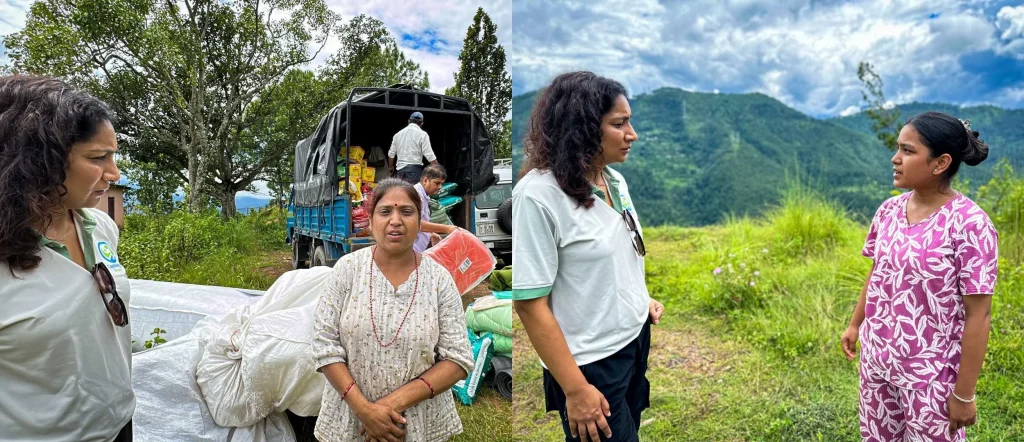
The disaster has left families with stories of survival and loss. Mrs. Karki, a kindergarten teacher, also experienced the terrifying force of the flood firsthand. Her teenage daughter was attending an early tuition class when the mudslide suddenly struck.
The girl fled with her classmates, leaving behind her books, bag, and jacket as water and heavy sludge tore through the pathways. As she climbed toward higher ground, she saw two younger girls swept into the surge but was unable to reach them. She continued climbing through the rain and cold for nearly four hours before finally reaching safety, where she collapsed from exhaustion and hypothermia.
Her story is one of many that shows the devastating impact and trauma of the disaster, and why immediate support remains so important.
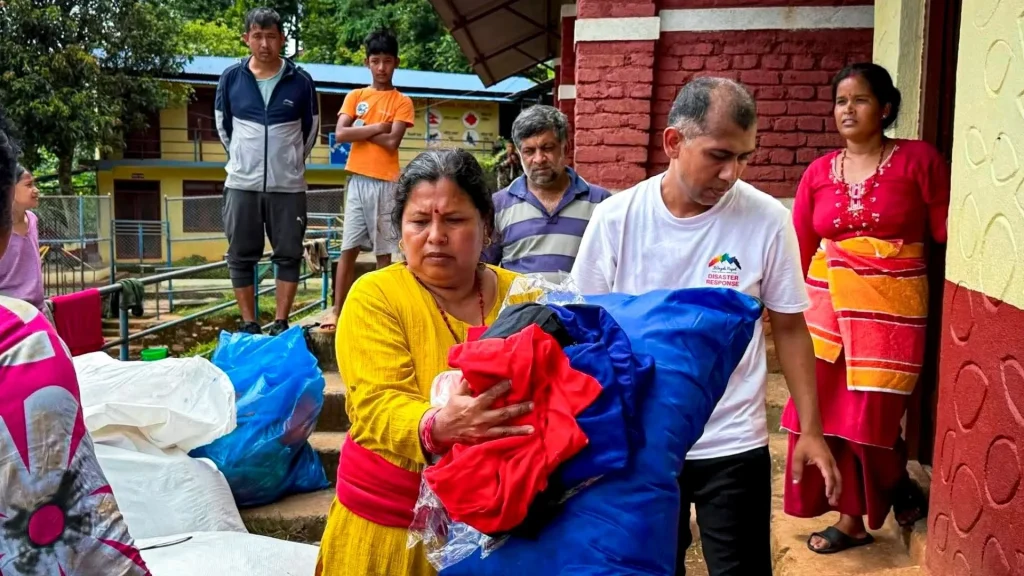
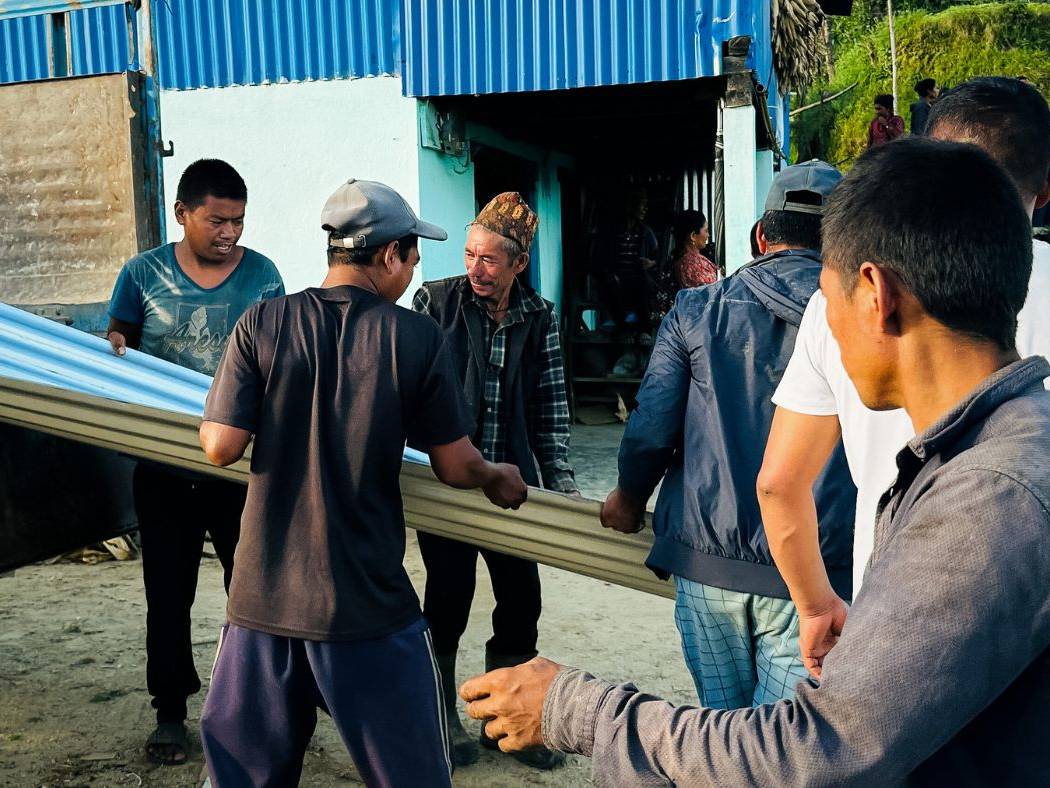
Our partner, 3 Angels Nepal, has also provided relief to 76 families. After learning that planned distribution centers were not yet operational, the team adapted by visiting affected families directly. Our team provided food, blankets, sleeping materials, and clothing, including kurta suruwal (traditional dress worn by Nepali women), petticoats, T-shirts, and sweaters. They also purchased additional sanitary supplies and undergarments locally after identifying needs not covered by the original relief supplies.
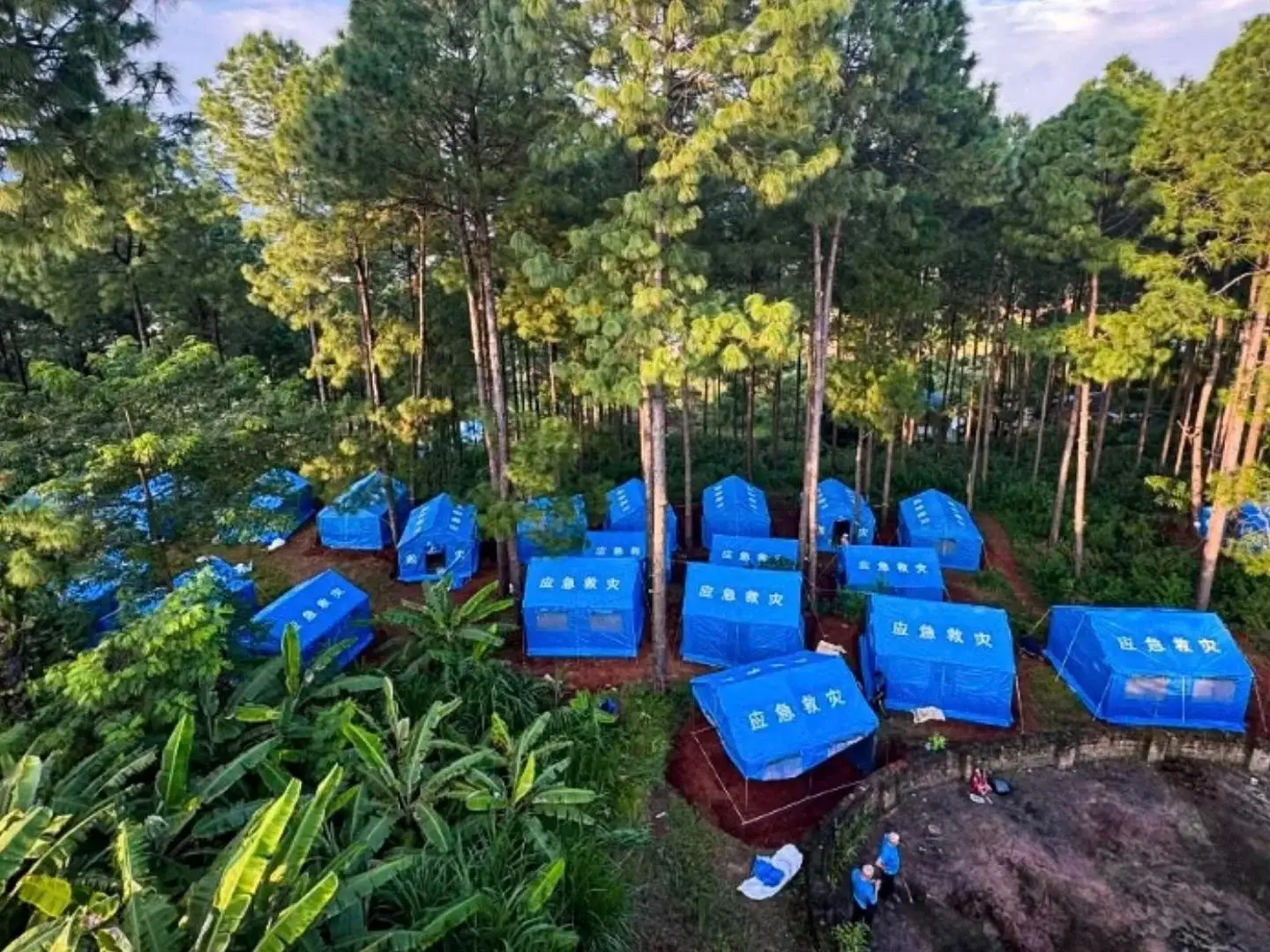
Along the way, the 3 Angels Nepal team encountered a mass shelter where 22 children and 42 women, along with several men, were staying under tents. The team provided additional essentials, including undergarments, towels, snacks, and toothpaste.
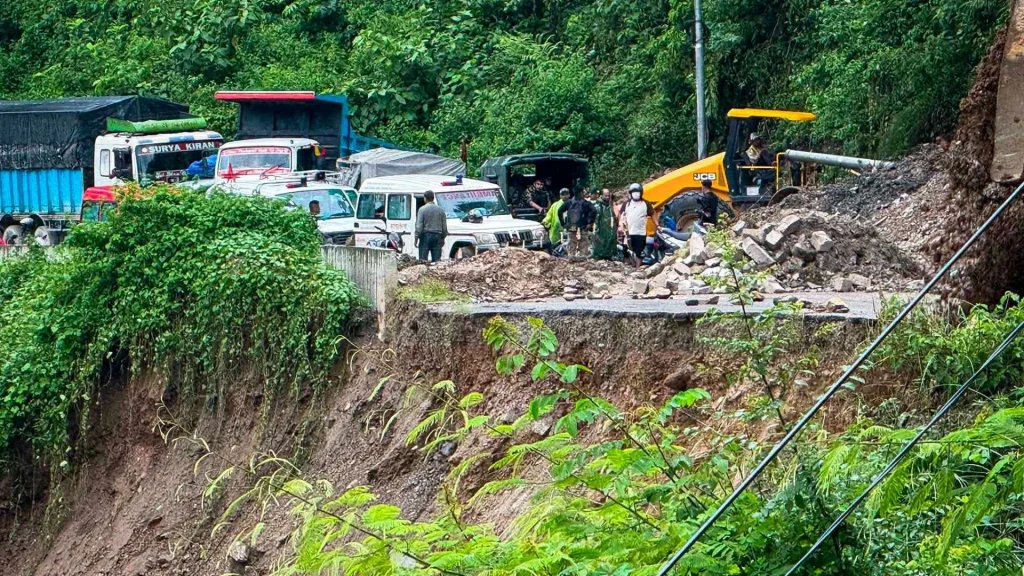
Reaching the families and affected communities remains challenging and risky. Roads have been heavily damaged by flooding and landslides, and heavy rainfall has blocked access to some areas. The team is planning further visits to communities that have not yet been reached, as conditions allow.
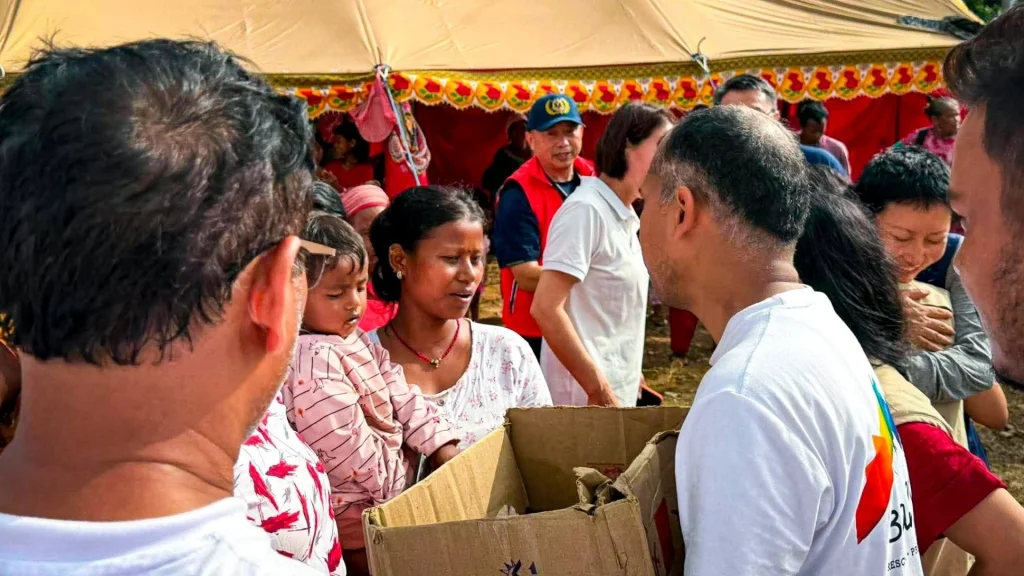
September 4, 2026 — Emergency Relief Underway:
The Captivating Nepal (CN) team began to act in the relief response in Gosainkunda Rural Municipality, Rasuwa. CN Program Manager Sagar and CN Director Mahadev went to Bidur, Nuwakot, to provide the victims with essentials such as food, clean water, medical supplies, hygiene tools, and shelter. The plan is to provide support to 69 people across 13 households with these items.
In the past, it took about 4-5 hours to get there, but the tragedy has heavily affected some roads—requiring alternative routes just to get there.
Once the Captivating Nepal team arrives in Gosainkunda, we will be updating this page with further developments.
For now, please consider donating to our Stop Trafficking 5K Nepal Flash Flood and Emergency Relief Fund starting at AUD 25 (USD 16). Different packages apply for different forms of help.
Be a Part of the Solution
Support our emergency relief efforts and help rebuild communities devastated by natural disasters.
Every contribution counts.