To bridge the education gaps of children in remote villages in China, we started our Send A Volunteer Teacher Program for newly graduated teachers and retired educators. One of these is Teacher Buli Jijimo (27), a language and music teacher for 3rd graders. She first started in March this year. We are fortunate to hear her story through a letter she sent us.
“I was born in Xide Lada, a Yi village nestled deep in the mountains—a place known as the homeland of the Yi language. There, the air carries the scent of buckwheat, and stories of our ancestors are passed down in ancient Yi dialects beside the hearth.
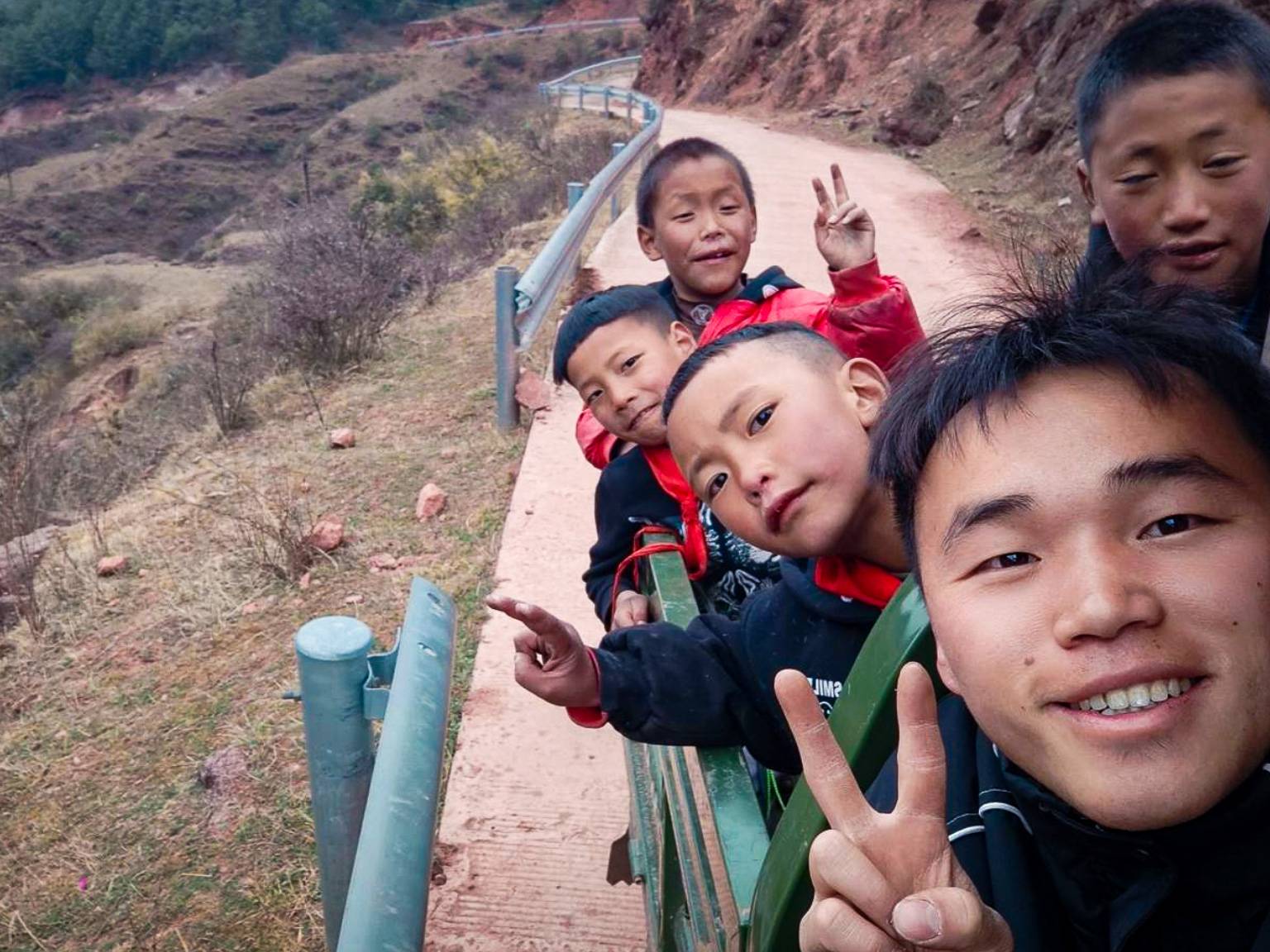
As a child, I dreamed of leaving the mountains, but as I grew older, all I wanted was to return to this land. So, wearing the traditional Yi attire hand-sewn by my mother, I followed the winding mountain paths to Migudi—Meigu County, the “Land of the Bimo” (Yi priests)—to begin my journey as a volunteer teacher this semester.
The first time I stood on the podium and introduced myself, the children looked at me with eyes full of curiosity and excitement. Perhaps they recognized I was Yi the moment they saw me, or maybe it was the mountain lilt still lingering in my accent. I teach them Chinese, music, and one very special subject: how to know and embrace their roots—Yi language and culture.
Whenever the textbooks mention ‘ethnicity’ or we begin a Yi language lesson, I pause and say, “For example, we Yi people have our own script, festivals, and beliefs…” At that moment, the children’s eyes light up—as if it’s the first time they realize just how precious their identity truly is.
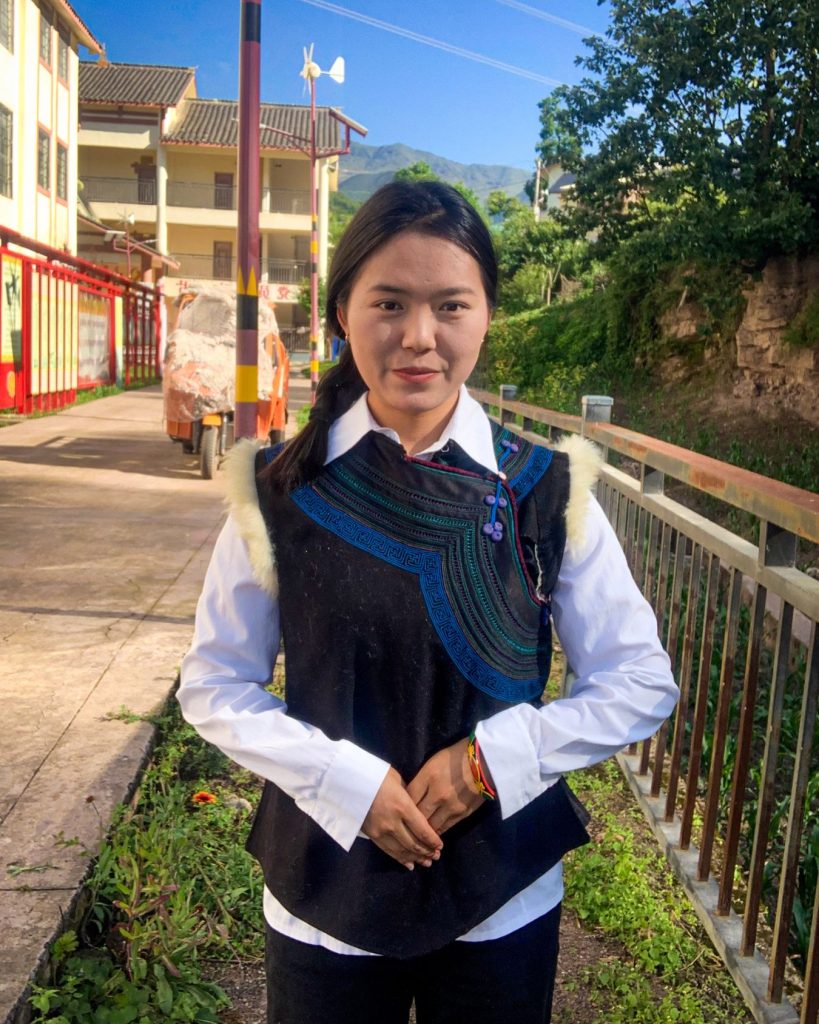
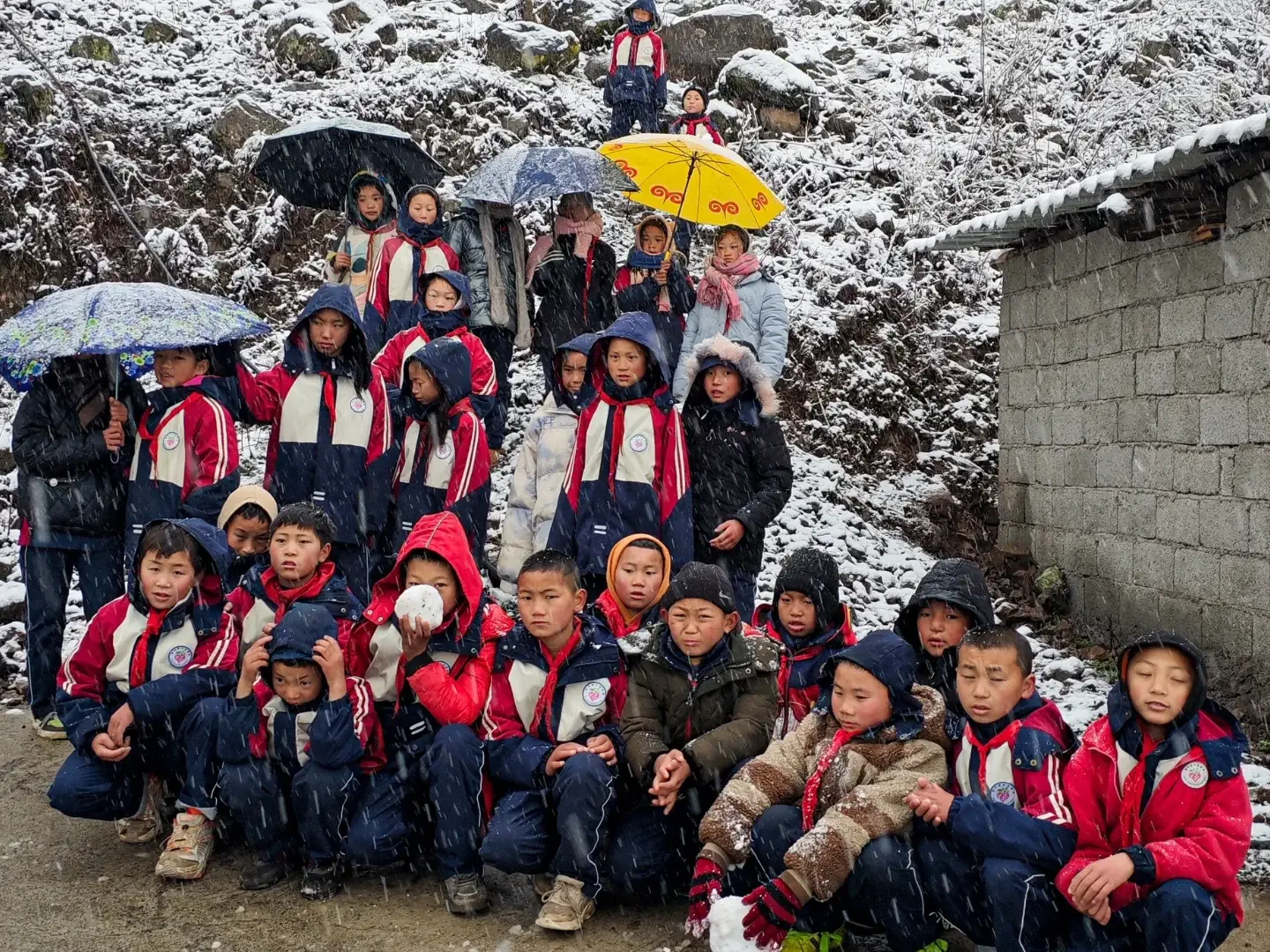
In the months of May and June in Taha Village, Meigu County, the mountain breeze carries the scent of buckwheat, potatoes, and corn, brushing past the earthen walls of the school. Morning mist rises with the smoke of cooking fires and the sound of reading aloud. Every time I step down the creaky wooden stairs, I hear the rhythmic recitation from the third-grade classroom. When I open the door, more than twenty pairs of eyes brighten instantly, and their uneven but cheerful “Hello, teacher!” echoes like a bubbling mountain stream. I instinctively scan the seats to check if anyone is absent.
I remember my first home visit clearly. I walked along narrow ridges between fields and entered a student’s home. Inside the low wooden house, a child crouched by the stove or lay flat on the ground doing homework, sunlight casting a soft glow on his focused profile. His mother, hands rough from years of labor, handed me a warm buckwheat pancake and a bottle of drink—something they usually can’t afford to enjoy themselves.
As this semester draws to a close, I’ve come to realize: the goal of education is not to turn mountain children into “outsiders,” but to help them—children who grow from the soil of hardship—see the stars and the sea beyond the mountains, while carrying with them the pride of being Yi.
I always remember this saying: “No matter how far a bird flies, it must never forget the direction of its nest. Look far, but remember who you are.”
I am Yi, and I am also their teacher—because my blood runs deep with the weight of these mountains.”
Be a Part of the Solution
With your support, we can ensure that students in remote villages receive the quality education they deserve.
Help us make education accessible to all.