
Many investors always advocate real estate investment as the most reliable asset one can have. As the New York-based real estate investor Louis Glickman once famously said, “The best investment on earth…is earth.”
In many parts of the world. Having land ownership closely correlates to financial stability. One can rent it out, grow crops, tend to livestock, or even sell it once the value appreciates.
In our success stories from our blog, we talk about families who are struggling to progress in rural China, while also mentioning how our beneficiaries are in possession of plots of land. To those who reside in areas where land is seen as a valuable asset, one may be confused about how they are still struggling with their quality of life when they already possess an asset that many people work their whole lives to have.
The answer is quite complicated, and there are many factors to consider, including policies, economic considerations, and social reasons—all of which we will discuss below. But first, how does land ownership in Rural China work?
Agrarian Reform Law in Rural China Explained
We must go back to basics. The Chinese government is a socialist state. The ideas of real estate investment in a capitalist society (that Glickman quote included) do not apply here.
In the 1950s, the People’s Republic of China (PRC) enacted the Agrarian Reform Law, just after the establishment of the PRC. As a start of a new government, the reform law served as a radical policy that drastically changed Chinese culture. This law abolished feudal land ownership, confiscating not only the land but also the animals and farm tools formerly owned by these feudal lords. After confiscation, lands were distributed to peasants, most of whom reside in rural China.
Initially, lands were owned by individuals, but in 1953-1956, collectivization began, transitioning from individual land ownership to communal ownership. In 1978, the Household Responsibility System was introduced:
Family-based Contract system
This is where land ownership will remain collective within the confines of their village. Households will receive long-term contracts for their use rights, and not ownership. While they are under contract, these families are expected to deliver a fixed quota of crops to the state or their community. Anything beyond that quota could be kept or sold by the family as they please.
Unified Management and household operation.
This condition works alongside the Family-based Contract System. The village collectives own the land on behalf of the villagers. They set the basic rules for land use and protection, manage allocation, reallocation, registration, and oversee shared resources like irrigation systems, roads, etc. Because of the Unified Management, land use remains a collective asset rather than an individual one.
Since families sign contracts to use a plot of land, they are obliged to produce, but do not necessarily make much income from it. They cannot develop, build, or rent them out. However, land-use rights can legally be transferred, leased, or pooled under current regulations. So, in short, land ownership (or contractual use) in China both sustains and may also constrain its citizens.
Land Fragmentation and Low Agricultural Productivity
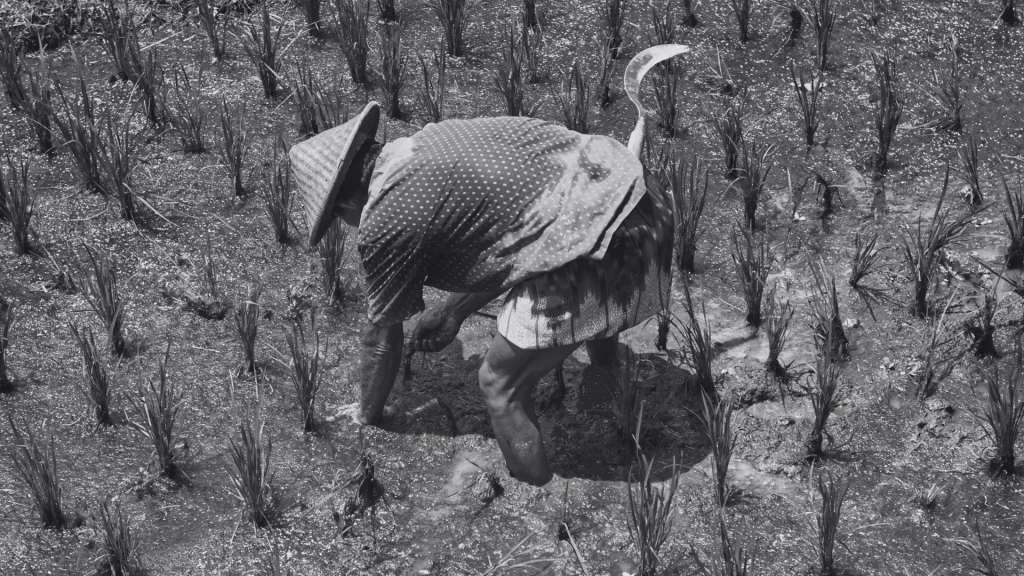
Since agriculture is the main purpose of land contracts, the next best solution is to make the most out of these plots of land. In some parts of the world, farmers are considered to be the wealthier few due to their self-sufficiency. But in China, it is not that simple.
One thing to consider is that land in Rural China is not always agricultural. They are either farmland, construction land, or barren land. Agricultural lands make up approximately 12-14% of all rural land, and construction about 3-4%. Barren lands are those abandoned plots, marginal lands, and sparse areas that have not been cultivated for farming.
In those 14% of agricultural plots of land, they are typically “fragmented” or scattered. Meaning, if one farmer contracts land, it does not necessarily mean that the land they possess is close to each other. Fragmented farming lets them move around to ensure productivity in all areas.
As a result? Increased labor and transportation costs, limited use of machinery, and reduced use of modern and efficient farming techniques. Since the land is not fully owned by these individuals, investment in irrigation systems or farming equipment is not always considered, eventually leading to lower agricultural productivity than what these plots could have potentially yielded. And even if they do intend to invest in their land, loans are not easily given out because they require assets (like land) to push through.
Limits on Market Access
Farming is one thing, but selling is another. Why would one sell seashells at the seashore when everyone else can just…pick the seashells up on the seashore for free? The same thing goes for people in these communities. Farmers won’t sell to their fellow farmers or neighbors because chances are, they have the same crops planted on their lands.
Even a bountiful harvest does not automatically equate to income. Farmers must travel far to sell their harvested crops in the markets. If unsold, they use them for household consumption along with their unsold livestock. Chances are, families with contracted lands will always have something to eat—but in modern times, this is not enough.
Migration, Aging Populations, and Labor Decline
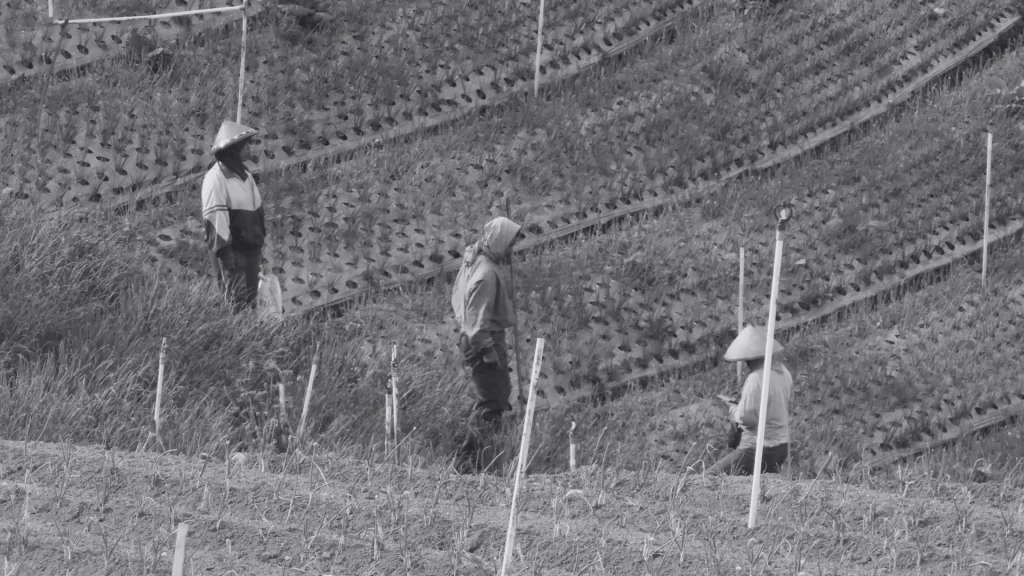
Rural China is experiencing an imbalance in its population. Recent data from a study conducted by Dou, et al shows that the proportion of individuals aged over 60 in rural China is set to increase to 28.74% by the year 2050. Right now, the aging population is already a key issue in these areas. Since there are not many opportunities for growth by farming here, younger individuals tend to migrate to the city to take jobs there, leaving an elder family member behind. Adults with young children typically leave them to the care of these children’s grandparents, hence the phenomenon of the left-behind children. In 2020, there were 41.77 million left-behind children from rural China.
Why is this a problem? Because when communities are increasingly made up of elderly residents and children, the labor force shrinks and adds more pressure to those who remain in these areas. With agriculture being the main source of income of the residents here, having this kind of population could weaken agricultural productivity if not immediately remedied by opportunities for the working-age adults.
In A Nutshell: Land Ownership Alone Does not Guarantee Financial Stability
Land in rural China provides security, but not prosperity. For many families, land ensures basic subsistence, food on the table, and a place to live—but it cannot easily be transformed into capital or opportunity. Moreover, aging populations and youth migration further weaken rural productivity. As this article shows, poverty in rural China is not a result of landlessness, but of structural constraints. Meaningful poverty reduction requires more than land—it demands supportive policies, market access, education, and sustainable rural development.
If you want to extend a helping hand to these rural Chinese villagers, we help rural Chinese communities by bridging education gaps and providing livelihood opportunities. Donate today or learn more about our work in China.
DID YOU KNOW?

How To Protect Your Children Against Predators (आफ्ना बच्चाहरूलाई शिकारीहरूबाट कसरी जोगाउने)
अनलाइन यौन दुर्व्यवहार के हो भन्नेबारे जान्नुहोस् र आफ्ना बालबालिकालाई अनलाइन शोषण तथा…
0 Comments6 Minutes

Online Sexual Abuse Red Flags (अनलाइन यौन दुर्व्यवहार रातो झण्डा)
अनलाइन ग्रुमिङका चेतावनी संकेतहरू, देखिन सक्ने सामान्य संकेतहरू, र आफ्नो बच्चालाई अनलाइन…
0 Comments7 Minutes

Ligtas ba ang Anak Mo Online? Mga Senyales na Kailangang Bigyang-Pansin
Alamin kung paano makikilala at maunawaan ng mga magulang ang grooming at mapoprotektahan…
0 Comments13 Minutes

How To Make Children Feel Safe and Heard In Times of Emergency
Learn how to build trust with your children through open communication, empathy, active…
0 Comments4 Minutes
Australian Charities to Donate To Depending On Your Advocacy
Australian charities to donate to across health, food security, education, human…
0 Comments9 Minutes

How Less Screen Time Doesn’t Mean Less Risk From OSAEC
Reducing screen time isn't enough. Learn the offline factors that increase children's…
0 Comments4 Minutes
Online Sexual Abuse Red Flags
Learn the warning signs of online grooming, common red flags, and practical tips to help…
0 Comments8 Minutes
How To Protect Your Children Against Predators
Learn what online sexual abuse is and discover practical tips to help protect your…
0 Comments7 Minutes

How Can We Achieve Quality Education Across Nations?
Quality education is key to reducing poverty. This article explores global education gaps…
0 Comments8 Minutes