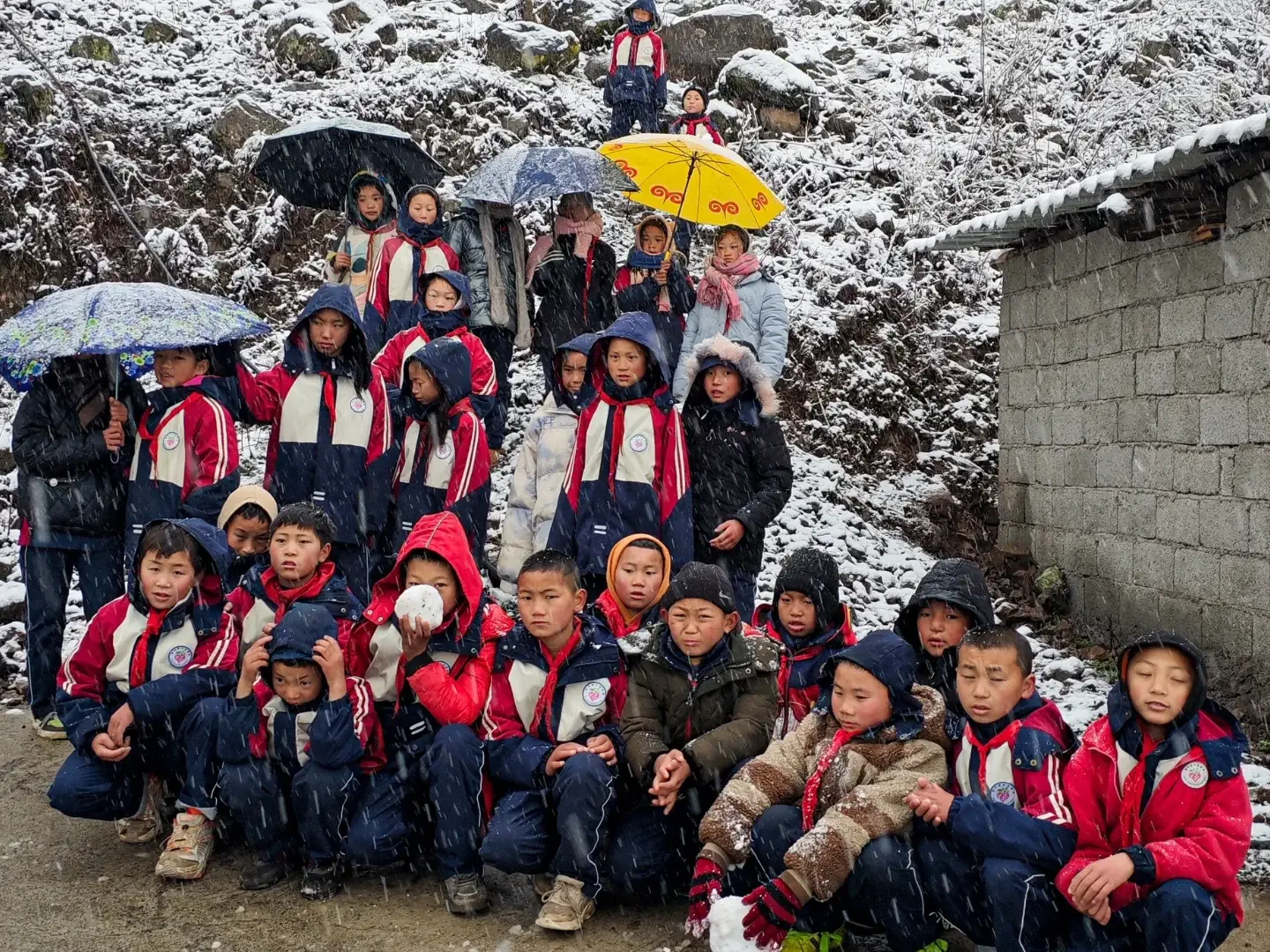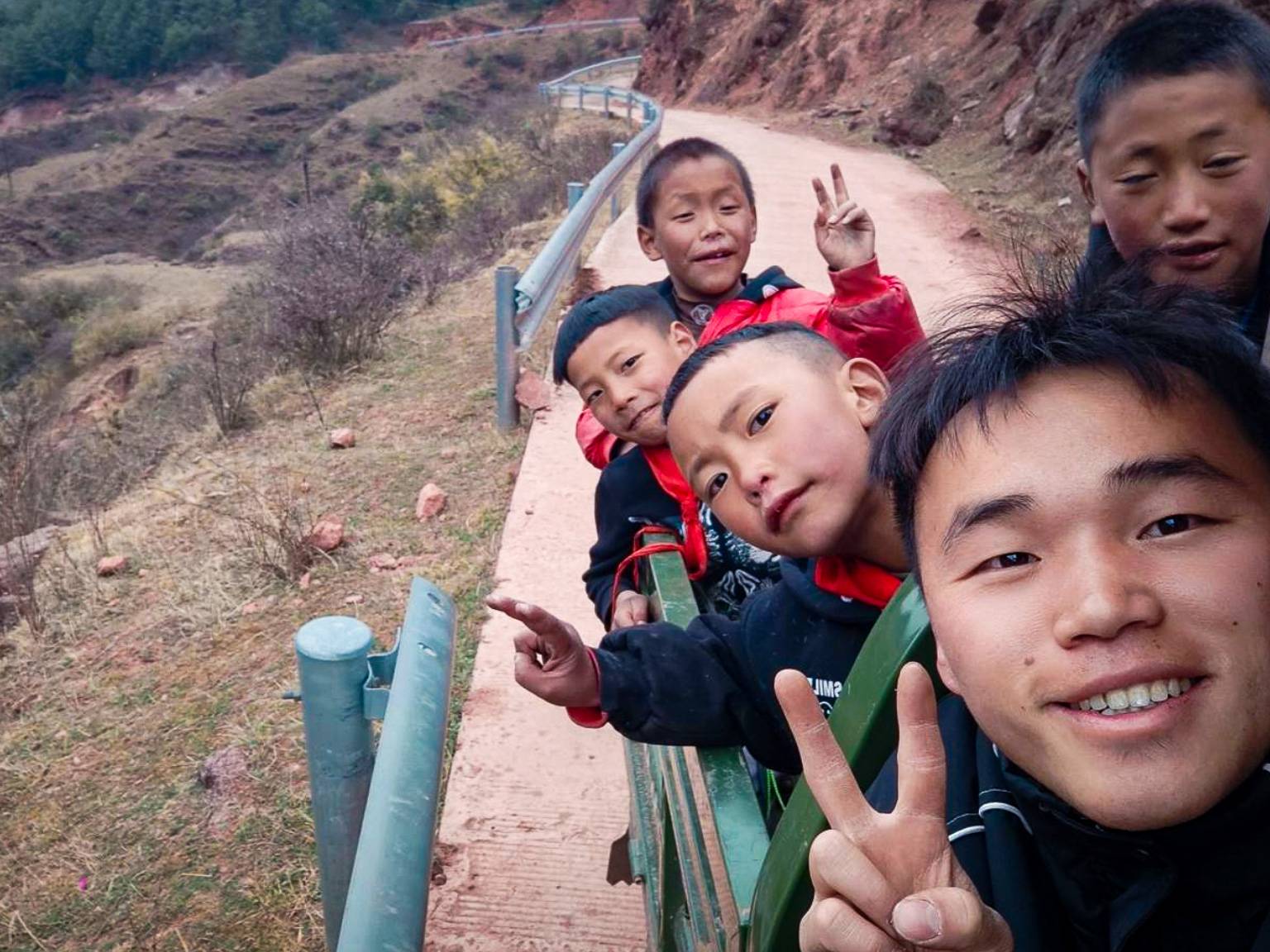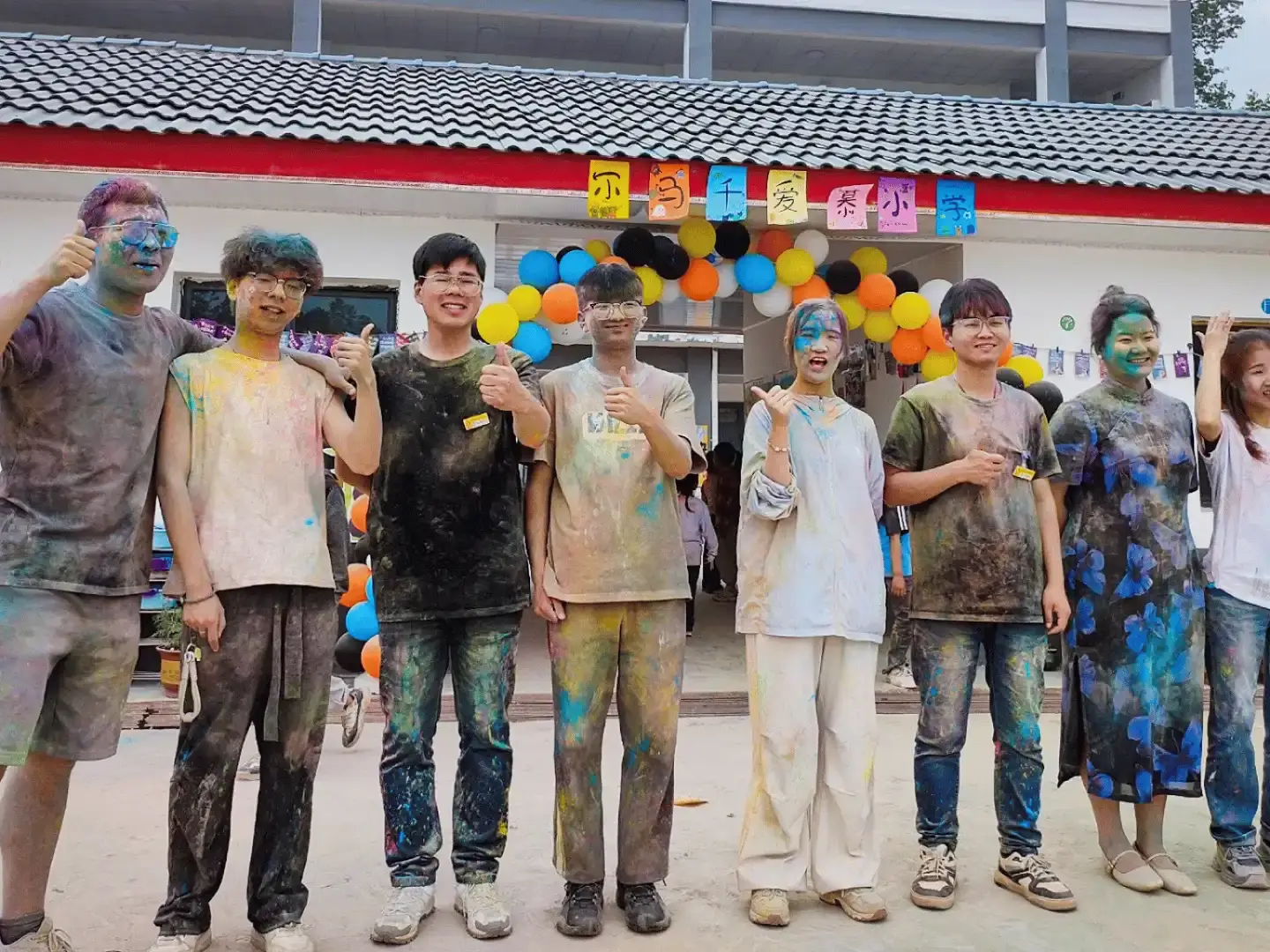
To bridge the education gaps of children in remote villages in China, we started our Send A Volunteer Teacher Program for newly graduated teachers and retired educators. One of these is Zhang Zhengzheng (28), a math teacher for 60 5th graders, and is now also the school principal. He began teaching in September 2022, and since then he has faced shocking realities and challenges in his rural community.
Volunteer teaching is often a thankless job, but even the most passionate teachers leave the profession because of the realities at hand. Teacher Zhang Zhengzheng honestly and generously shares his ups and downs as a volunteer teacher with us through a letter.
“Hello, everyone! My name is Zhang Zhengzheng, and I’m from Huaibei, Anhui Province. I’m 28 years old. I graduated from university during the outbreak of COVID-19. Travel restrictions made working outside difficult, so I chose to prepare for graduate school, but I didn’t pass the entrance exam. I eventually found a job, but spent those two or three years feeling lost, just going through the motions. During that time, I kept asking myself: What am I good at? What do I really want to do? What can I do well? Do I really want to live my entire life this way?
But then again, isn’t that what most people do? Work hard, earn money, start a family? It’s a perfectly valid life path. Still, I found myself wanting to do something meaningful—something that matters to me. While I’m still young, while my parents are still healthy, I decided to resign from my job and join a rural teaching program.
With a thousand hopes and expectations, I finally arrived. I was both excited and nervous about what lay ahead. During the training in Xichang, my fellow volunteers were warm and kind—it felt like we had all been waiting a long time to meet each other. After passing the training, we were assigned to different schools. After just two days of getting to know each other, we each headed off to our posts, deeper into the mountains.
After more than four hours of travel along mountain roads, we arrived at the school around 2 a.m. I noticed the school yard was quite large, and after a bit of unpacking, we quickly went to bed. The next day, seeing the full campus in daylight, I realized it was much better than I had imagined. In fact, it’s the largest village school under our association’s umbrella. Our principal, who has been here for more than four years, led a meeting to finalize class schedules, living arrangements, elective classes like art, music, and PE, and all kinds of activities like recess games and cheerleading. Everything was decided together—since all the teachers here are volunteers, we rely on collaboration to solve problems. I truly admire our principal and the teachers who’ve stayed here for years.
That afternoon, we walked to a nearby market to purchase supplies. The journey took quite a while, but none of us felt tired—we chatted, laughed, shared stories, and admired the scenery. The sky looked so blue and pure.
Everything was ready—we just waited for school to start. But due to COVID delays, the opening date kept getting postponed. I was getting impatient. I’ve always been the chatty type—whether with kids or adults, I can talk endlessly. I love my students. I love talking to them about everything. I love being around them.
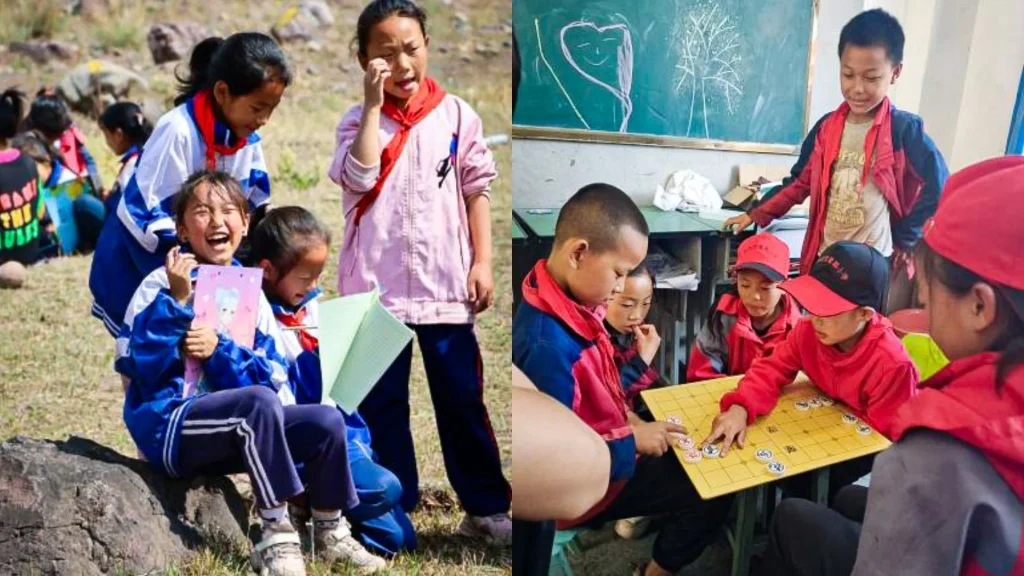
When I first arrived, the kids were shy but eager to play. They wanted to bring us to their homes after school, holding our hands, clinging to us. We played chess, wrestling, and all kinds of games together. Especially with younger students and new teachers, the bond was instant. During recess, they would gather around me, talk non-stop, look through my phone, or just sit beside me and listen.
On sunny days, I organized hair-washing sessions for the girls in my class. Many of them had long hair but rarely washed it, especially in winter, and head lice were common. They actually loved getting their hair washed at school. After a successful midterm exam, the language teacher and I took the kids on a spring outing to the foot of the mountain. We brought kites and paints. Under the spring sunshine, we ran freely, painted, flew kites—and in that moment, everything felt beautiful, meaningful, and worth it.
Over time, our relationship matured. I became more focused on their academic progress, their study habits, hygiene, manners, and class management. They became familiar with my expectations and personality. I am now strict about learning in class, but outside of class, we’re like friends—jumping rope, playing table tennis, hiking on weekends, even playing hide-and-seek in the evenings (though they’re still a bit afraid of the dark).
I am their friend, but more importantly, I am their teacher. I can’t just play with them—I have to help them learn and grow. My primary mission is teaching—to open their minds, broaden their horizons, and help them break free from the limitations of the mountains.
When I first arrived, the average math score in my class was only in the 40s. I started to doubt my own abilities. Language scores were worse—mostly in the 30s, sometimes even in the 20s. Though I had heard about the local academic challenges before coming, the reality still hit hard. There are reasons for this. This is Liangshan Yi Autonomous Prefecture, a mountainous region with limited access to the outside world. Major changes only began after 2015.
The people here have their own language and writing system, making communication with the outside world even harder. The government began integrating this area into modern society after 1949—hence the saying “a thousand-year leap in a single step.” Even now, most parents don’t speak Mandarin, and many children start primary school without knowing any Chinese. This makes teaching—especially language—very difficult. It’s hard to improve their scores. Even math is challenging because their comprehension skills are lacking.
So I started from the ground up—adjusting my lesson plans, exploring teaching methods better suited to local children, and putting in extra time and care. I paid attention to their moods, personalities, even who they sat next to. The language teacher and I made plans together. From the moment they arrived in the morning, I supervised them closely—during morning reading, lunch breaks, self-study sessions, and after school. I offered tutoring and worked to fill gaps in their learning. Now, the class average in math is over 80, among the top in the entire county. You can’t imagine how proud and happy I am.
Material conditions here have improved greatly thanks to poverty alleviation programs. But their cultural and spiritual awareness still has a long way to go. And honestly, how many people are willing to stay long-term and truly commit to this work? Since I arrived, the language teacher in my class has already changed twice. The current one is likely to leave next term too. It’s hard to make long-term plans here, since all we receive is a basic living stipend.
I don’t know how long I’ll stay—hopefully as long as possible. I want to see my class through to graduation. If conditions allow, I’ll stay longer. This is what I want to do. It’s something I’m willing to do.
And sometimes, I feel like I’m the one making a difference for my students. But deep down, I know—it’s the students who’ve made a difference in me.”
Be a Part of the Solution
With your support, we can ensure that students in remote villages receive the quality education they deserve.
Help us make education accessible to all.