
Many cases of human trafficking and Online Sexual Abuse and Exploitation of Children (OSAEC) start from a seemingly harmless friend request. Whenever we intercept or rescue women from human trafficking situations in Nepal, we often trace the origin story back to their social media usage. In the Philippines, OSAEC also often happens in low-income families due to their desire to make quick cash with seemingly “very little harm” because the child victims were not “touched” by predators anyway.
Harms brought about by the usage of social media platforms are not exclusively experienced by the poor, but a study by McGill University links more “problematic” or addictive social media usage to individuals from lower-income families.
In this article, we will explain why the poor are more vulnerable to real-world risks associated with social media usage.
Social Media as Escapism
German philosopher and social theorists Theodor Adorno and Max Horkheimer once introduced the concept of “Culture Industry”. Here, he explained that “Entertainment is the continuation of work,” Meaning modern forms of leisure had already been formulaic. If you take a look around the various forms of mass media: TV, radio, and the internet, you can see how the following forms of entertainment can function as an activity to pass the time, a tool to pacify its audience, or even escapism.
In the Philippines, the free TV channels in the country follow a schedule that adheres to the schedule of the working class. Morning shows start from 5 AM until 8 AM, just in time for people to tune in as they get ready for school or work. Daily news airs from 6 to 8 PM, before airing the “prime time” shows—right when people are already home, finished their dinner, and now relaxing to their favorite show.
Social media is just another form of this, albeit different in structure and appeal. It is much more personal, hence much more appealing to its audience. There exists a chain of reception and feedback from the audience to the creator, making them feel much closer to the content creator on the platform. Unlike traditional media, social media provided more inclusivity and fairness, which made audiences feel more seen.
Social media’s appeal is not only built on our interest in each other’s lives and interests. Its very design makes users want to scroll some more because it is engineered to trigger dopamine releases. Teens are much more likely to be addicted to social media platforms partly because they are at the age where peer validation and pressure are the highest.

Social Media as Capital
There are countless success stories on social media that it is now considered a valid form of livelihood. The hopefuls can hop on a trend, and when “blessed” by the “algorithm gods”, they might, too, make it. People can sell, stream, and/or post content as they please. There is no limit to what they will put out as long as they match the platform’s community standards. For those who have no cultural or economic capital to start, playing the social media attention game is their best bet.
Parasocial relationships work best in a user’s favor because they are actively watching them. The more they trust or feel close to a personality, content creator, or influencer, the more they will give them attention. Influencer marketing is one of the most effective ways to advertise products online because brands are partnering with personalities that have already established themselves as trustworthy actors in these spaces. And since the creator needs to sustain their audience’s attention, they need to work harder to keep them glued.
All of this effort could make the poor one think that one day, they could also be like their “idols”. If they speak, talk, and act like them as they follow their posting habits to get their big algorithm break.
Social media as a platform for connection
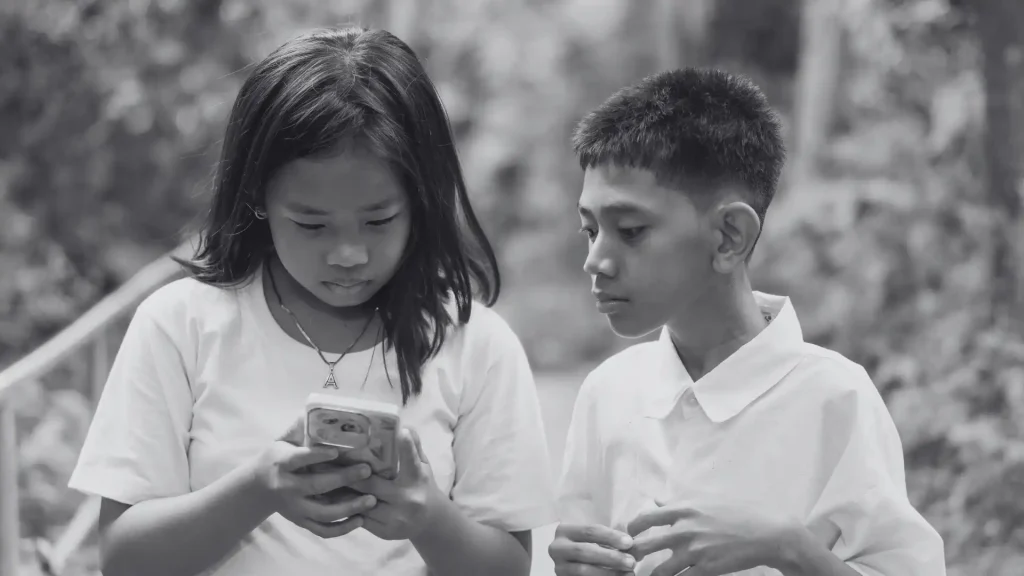
Social media platforms like Facebook were initially designed to connect people. While community is strong and present in impoverished communities, many yearn for connection and acceptance outside of it. Teens are especially susceptible to feeling lonely due to their heightened need to belong. Adults who work themselves to the bone all day yearn for someone they could share their troubles with at the end of the day. When one’s living conditions are, well, unlivable, unsafe, and lonely—they turn to the most convenient ways to connect, connections that fit their pockets and are only a few taps away.
Amita (16, name changed for privacy) is a victim of a love scam. She lives in a poor household and finds escapism through Facebook. There, she met a man who promised her a life of comfort and luxury, which, spoiler alert: is a human trafficker who has done the same scam to lure girls into disappearing forever. Like in real life, predators understand the need for human connection with those who are vulnerable, and they are consistently becoming victimized for it.
The catch
Nowadays, people are more aware of the dangers of social media to their health, safety, privacy, and security. Social media retreats are even some of the more marketable forms of relaxation for those who are overwhelmed by the endless scroll. People have been reportedly more anxious, dysregulated, and oftentimes detached from their real-life relationships because of social media addiction. Scams, identity theft, harassment, and OSAEC happen in these social media platforms every day. While everyone else tries to use their will out of the dependence, companies just keep designing their platforms to retain and extract as much attention as they can to keep the attention economy well-oiled and alive.
Conclusion
Like poverty, social media habits and usage are not always an individual failure. Social media has positioned itself as one of the most accessible platforms for entertainment, community, and even economic capital. Because of it, those who are at the lowest rungs of society are given more (albeit false) hope that their living conditions could be better if they contribute more to the algorithm.
We help intercept women and girls who are victims of online love scams through our Anti-Human Trafficking awareness and interception efforts. You can help by donating today.
DID YOU KNOW?
Why Are Filipinos Not Talking About OSAEC?
Learn why conversations about online safety and OSAEC are often delayed in vulnerable…
0 Comments4 Minutes
International Day for the Eradication of Poverty: History and How to Help
Learn why the International Day for the Eradication of Poverty matters and how you can…
0 Comments9 Minutes
How To Protect Your Children Against Predators (आफ्ना बच्चाहरूलाई शिकारीहरूबाट कसरी जोगाउने)
अनलाइन यौन दुर्व्यवहार के हो भन्नेबारे जान्नुहोस् र आफ्ना बालबालिकालाई अनलाइन शोषण तथा…
0 Comments6 Minutes
Online Sexual Abuse Red Flags (अनलाइन यौन दुर्व्यवहार रातो झण्डा)
अनलाइन ग्रुमिङका चेतावनी संकेतहरू, देखिन सक्ने सामान्य संकेतहरू, र आफ्नो बच्चालाई अनलाइन…
0 Comments7 Minutes

Ligtas ba ang Anak Mo Online? Mga Senyales na Kailangang Bigyang-Pansin
Alamin kung paano makikilala at maunawaan ng mga magulang ang grooming at mapoprotektahan…
0 Comments13 Minutes

How To Make Children Feel Safe and Heard In Times of Emergency
Learn how to build trust with your children through open communication, empathy, active…
0 Comments4 Minutes
Australian Charities to Donate To Depending On Your Advocacy
Australian charities to donate to across health, food security, education, human…
0 Comments9 Minutes
How Less Screen Time Doesn’t Mean Less Risk From OSAEC
Reducing screen time isn't enough. Learn the offline factors that increase children's…
0 Comments4 Minutes
Online Sexual Abuse Red Flags
Learn the warning signs of online grooming, common red flags, and practical tips to help…
0 Comments8 Minutes